How brands can create content for generative search interfaces
 Mikhail SlivinskiyPublished Sep 14, 2026
For many years, the primary goal of search was to rank well, drive clicks, and capture organic traffic. The underlying logic behind search technology has not changed, but the interface has. AI-powered search engines can now synthesize comprehensive answers to user queries instead of just surfacing relevant links.
Generative search is not a new discipline operating on different logic, but it does raise the bar for what counts as a complete and trustworthy answer. Brands that want to adapt well to this technological shift need to understand that distinction and build a new strategy around it, rather than chasing a set of new technical tricks.
What used to work no longer wins on its own
Why technical SEO stopped being a differentiator
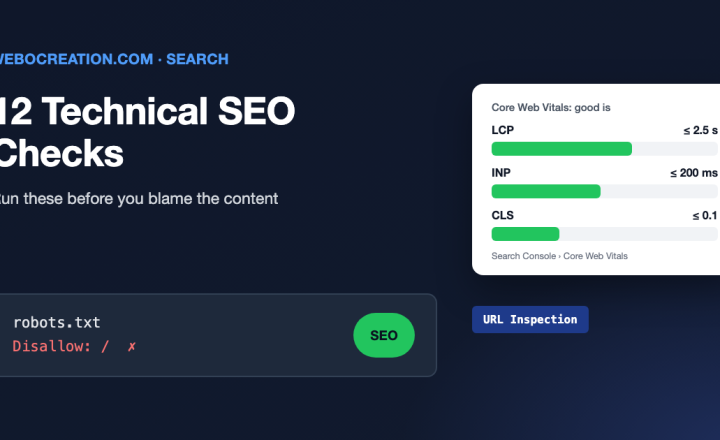
Marketers may treat this shift in search as another technical problem: fix crawl errors, improve site performance, and optimize for specific, measurable metrics. These things matter, but they’re a well-lit sign above the door, not what makes you the best shop on the block. In other words, technical SEO is best treated as a baseline rather than as a differentiator.
Generative search systems are unlikely to elevate a page simply because its technical fundamentals are flawless. Instead, they are more likely to use it in their answers because it resolves a user’s need better than anything else available. A technically perfect page with nothing distinctive to say is not a reference-worthy source.
From relevance to meeting user needs
Traditional search had largely solved the problem of finding sources relevant to a user’s query. Generative search is chasing a different problem: identifying the single best answer among a genuinely crowded field of relevant options.
To get their content referenced by generative search systems, brands should focus on what the user is actually trying to solve, what stage of that decision they’re in, and what related questions will naturally come up along the way. Content built to answer these questions has a real advantage over content built to match a keyphrase.
What generative search actually rewards
Content that solves the task
Even with a new interface, the best search result is still the one that fully solves the user’s task — generative search just expands that principle. A traditional search engine matches a keyword and surfaces the most relevant page, while a generative system considers the user’s broader intent.
For example, Alice AI, embedded in Yandex Search, can expand a query into multiple related questions and draw on sources that cover those adjacent angles well when synthesizing a response. A page that answers only the literal query may not be enough on its own.
To address the full task, it helps to think ahead: what comparisons or follow-up questions will naturally come up around a topic? Content built around a fuller understanding of the user’s task tends to get referenced more than content built around a single search phrase.
Genuine depth, originality, and expertise
Rather than treating expertise as a single measurable signal, it’s more useful to think of it as a pattern of quality running through a piece of content. The EPOS framework Yandex uses to evaluate content captures such patterns well: Expertise, Practicality, Originality, and Substance. Does the content say something original? Does it go deep enough to actually inform a decision? Does it genuinely help someone accomplish what they came to do? Is there a real human perspective behind it, rather than generic filler?
Brands can build toward this by understanding their core audience, clarifying what actually makes their offer different, and writing from real knowledge. A brand that clearly articulates what sets it apart is building the kind of content a generative answer might plausibly cite.
The broader information footprint
Visibility has long outgrown the website
For a long time now, a company’s website hasn’t been the only thing shaping how that company gets represented. Users build trust from a much wider ecosystem, including comparison articles, independent reviews, blogger coverage, and video content — and generative systems may draw on any of it. That means brands need to think strategically about who is writing about them. PR, content partnerships, community engagement, and earned media are now real parts of a search strategy, not adjacent to one.
Visibility belongs to the whole business
Search visibility, particularly across the new generative interfaces, is no longer a problem that one SEO specialist can solve in isolation. It is shaped by product teams, marketers, content editors, PR, and anyone else responsible for the value proposition.
The real task is creating something genuinely helpful and then ensuring it is represented credibly across every surface where a user might encounter it. That is a whole business problem rather than a single specialist’s problem.
Key takeaways
Generative search rewards content that fully resolves user tasks, carries genuine signals of expertise, and shows up credibly beyond a brand’s own channels. Meeting that standard takes more than technical fixes. Rather, it takes a strategy built around what generative search actually values.

Mikhail Slivinskiy is Search Ambassador at Yandex with over 15 years of experience in search technology and SEO. At Yandex, he has worked across product development, webmaster tools, and publisher engagement, including leading Yandex Webmaster from 2017 to 2024. He now focuses on how AI-driven search is evolving and how businesses can maintain visibility through authoritative content.