Applying Artificial Intelligence in IoT and Wearable Devices

Over the past years, the world has steadily embraced wearables—from hearing aids to smartwatches. However, the rise in the use of AI assistants and the development of the Internet of Things (IoT) has fueled the market expansion of wearables today. While it has been a part of our daily lives, the application of AI in IoT and wearable devices are now being utilized by many to launch or improve their businesses, ushering in a new commercial and consumer technology era. Adopting and investing in these technologies will enable consumers, companies, economies, and industries to use their capabilities and gain competitive advantages. 

What is Artificial Intelligence? 

One of the most popular technological advancements is artificial intelligence, or AI, which has proven applications in many sectors. It’s a technology that operates more quickly while simulating human intellect. Consider the famous artificial intelligence systems like Apple’s Siri or Amazon’s Alexa. Due to this invention, there were many technological advances in various industries, including healthcare and finance. That’s why it’s a big step when AI is employed in the Internet of Things and wearable technology. 

Why Do IoT and Wearable Devices Need Artificial Intelligence?

IoT enables devices to communicate with one another and act on these discoveries. These devices are only as valuable as the information they offer. The data must be gathered, saved, processed, and analyzed to be helpful for decision-making.

Because of this, organizations face a dilemma. They need help to effectively process and use the data for practical decision-making and insights. Hence, a rising need for artificial intelligence to come up with rapid, real-time decisions just like a human being. Without rapid data processing, lags may affect the performance and speed of these technologies, not to mention the dangers in emergencies.

What Are the Applications of Artificial Intelligence in IoT and Wearable Devices?

The usability and benefits of wearable technologies span a wide range. Each AI wearable device functions differently depending on the area they fall under, such as fitness, health, or entertainment. 

Contrary to most beliefs, wearable devices have already been introduced into various situations. The most widely used wearable technology applications across many industries are as follows:

Sports and Fitness

Recently, the sports and fitness industries have merged with the tech world. These days, biosensors are a standard feature in AI-enabled Bluetooth fitness trackers. These biosensors can pick up motion, touch, proximity, elevation, and heart rate. 

Developing smart headphones with an AI-based personal trainer, which directs the training process by providing real-time tracking details of cycling, running, and other exercises is another example of how AI is utilized in the sports and fitness business. As a result, body-mounted AI wearable devices can successfully give their customers comprehensive fitness statistics by using voice assistants and in-the-moment insights.

Healthcare 

The healthcare industry has already undergone a digital transformation that has improved and increased the functionality of wearable AI analytics that provide patient health statistics and real-time insights, inference, diagnosis, and reports. 

The Internet of Things, an AI-driven healthcare IT system, is now connected to medical apps and equipment. Patients can now take preventative healthcare steps at home by keeping track of their health information thanks to AI and wearable technology in healthcare. 

The Internet of Things (IoT) artificial intelligence wearable intimately links all the data with real-time health monitoring sensors that provide timely reports and display various health factors that assist the patients in making quick judgments and taking the necessary actions to keep themselves well. 

Retail

Wearable monitoring devices with artificial intelligence are also evolving in the retail sector. Consumer retail, particularly the garment industry, is already producing products using wearable technology’s cutting-edge capabilities. Mobile apps are now synchronized with AI-driven wearable clothing like hand gloves, jackets, etc., to ensure the user’s or wearer’s safety. This fashion innovation, sometimes called smart clothing, has made its breakthrough recently. 

Gaming

Mobile gaming will continue to be a thriving industry for the foreseeable future. It might be primarily a result of the introduction of wearable artificial intelligence in its sector. The industry is heading toward a hedonist user experience, from creating AR and VR-enabled games to real-time audio and visual trackers with AI capabilities. Gaming devices have seen a rise in user engagement thanks to AI-enhanced wearables.

Many people have expressed interest in AI-powered gaming due to the introduction of various VR devices. Since the target audience wants an interrupted AI-driven experience, wearable technology and gaming are frequently used symbiotically linearly.

Smart Homes

Artificial intelligence makes smart houses a reality. These homes leverage AI through linked sensors, appliances, and lighting to gather data for analysis. Additionally, with the help of AI, these gadgets can improve how you live your life by offering you utilities and other services that can make your existence more efficient. 

Today’s market has a wide variety of smart appliances; some of the more well-known ones are refrigerators, air conditioners, and lighting. For instance, smart refrigerators can help you save money and reduce carbon emissions. Depending on the type of food it contains, they alter the temperature. Other refrigerators with AI capabilities might even read recipes so you can stock up on the right things during your subsequent supermarket run. You’ll have a lot of choices for smart technology while creating your smart home. 

The Challenges Associated With Incorporating AI in Wearable Devices

Although the development of AI may have simplified processes and solved several issues, there are also some drawbacks. Let’s look at them:

Battery Life

Maintaining the battery life was one of the main areas of difficulty throughout the entire AI project management cycle while developing and evaluating wearable fitness devices. The batteries in AI wearables frequently run out considerably sooner than desired because they have far less computing power than smartphones. 

Privacy

A significant amount of data is required to apply wearable artificial intelligence properly. For instance, some AIs, such as those that use wearable cameras for facial recognition, are security-sensitive. That’s why maintaining privacy as the primary priority, in this case, is crucial. 

What Is the Future of Wearable Devices?

The future of wearable devices is promising. Smartwatches won’t be the only wearables available; several other industries will also investigate wearable AI technology. What to anticipate from wearable technology in the future is as follows:

Energy harvesting: The use of wearable technologies extends battery life. It can be annoying to wear a smartwatch that must always be charged. In the future, such devices will have a function or energy that transforms solar energy or body heat into raw electricity. 

Identification and authentication: Most apps demand two-factor authentication. However, wearable machine-learning technology will eventually have authentication capabilities. Users can access such apps with basic biometrics and other less complicated features. A few entrepreneurs also consider smart tattoo technology, which can scan identity information as it transfers.

Final Thoughts

Getting caught up in the sensors, hardware, and communication protocols of wearable devices and the Internet of Things is simple. Still, the essential differentiator of your solution will be the helpful intelligence it extracts from data.

Take the time to learn AI fundamentals and discover the truth. You will then be prepared to create a defendable business strategy armed with a potent arsenal. You can then build a more valuable company that will outperform competitors. 

The Next Frontier of Technology: Metaverse Development

Technology has been rapidly advancing over the years, and the latest development set to revolutionize the tech industry is the Metaverse. A metaverse is a virtual space where people can interact with a computer-generated environment in real time. This article will discuss the Metaverse, its potential impact on technology, and how it is being developed.

What is a Metaverse?

A metaverse is a mutual virtual shared space created by converging virtual reality (VR) and augmented reality (AR) technologies. It is a digital universe where users can interact with others and the environment. The metaverse concept was first introduced in Neal Stephenson’s novel, “Snow Crash,” and has been popularized by virtual worlds such as Second Life and Minecraft.

The Metaverse is not just a video game or a simulation but a platform for social interactions, commerce, and entertainment. It allows users to have a persistent online identity and to engage with others in a virtual space. In the Metaverse, users can create and customize their virtual avatars, build and own virtual assets, and participate in various activities such as gaming, shopping, and socializing with Metaverse consulting services.

Section 1: Potential Impact of Metaverse Development on Technology

The Metaverse is set to significantly impact technology as it is a new platform for innovation and growth. Here are some potential effects that metaverse development could have on technology:

  1. Augmented Reality (AR) and Virtual Reality (VR) Development: The Metaverse combines AR and VR technologies, and its outcome could lead to new advances in these areas. With the Metaverse, developers can create more immersive and interactive environments where users can experience a seamless blend of virtual and physical worlds.
  2. Blockchain and Cryptocurrency Development: The Metaverse is a platform for development. Users can buy, sell, and trade virtual assets using cryptocurrency, and the blockchain can be used to secure transactions and prevent fraud.
  3. Artificial Intelligence (AI) Development: The Metaverse also presents new opportunities for AI development. With AI, developers can create smarter virtual environments to interact with users and provide personalized experiences.
  4. Gaming and Entertainment: The Metaverse is already being used as a platform for gaming and entertainment, and its development could lead to new gaming and entertainment experiences. With the Metaverse, developers can create more immersive and social gaming experiences where players can interact with each other in a virtual space.
  5. E-Commerce Development: The Metaverse is also a platform for e-commerce development. Users can use it to buy and sell virtual goods and services, and e-commerce platforms can use the Metaverse to create more immersive and interactive shopping experiences.

How is the Metaverse Being Developed?

Several companies and organizations are leading the development of the Metaverse. 

Some of the key players in metaverse development include:

  1. Facebook: Facebook is one of the leading companies in metaverse development. It has recently announced its plans to create a metaverse platform where users can interact with each other in virtual environments.
  2. Epic Games: Epic Games is the company behind the popular game Fortnite. It has also announced its plans to create a metaverse platform where users can create and share content.
  3. Roblox: Roblox is a popular gaming platform used to create virtual worlds. It is also working on its metaverse platforms for using virtual environments.
  4. Decentraland: Decentraland is a blockchain-based virtual world where users can buy, sell, and build virtual world real estate. It uses a decentralized system to govern its operations and relies on the Ethereum blockchain for its transactions.
  5. Second Life: Second Life is one of the oldest virtual worlds, created in 2003. It has gone through many changes over the years and has evolved into a platform that allows users to create and interact with each other in a virtual world.

These companies and organizations are working towards creating a seamless metaverse experience for users. They use advanced technologies such as blockchain, virtual and augmented reality, and artificial intelligence to develop the Metaverse. They are also exploring new ways to monetize the Metaverse, such as selling virtual world real estate and goods.

Section 2: Metaverse and eCommerce

The concept of the Metaverse has been around for a while. Still, it has recently gained more attention due to technological advancements and the growing interest in virtual reality. The convergence of physical and virtual reality created the Metaverse. It is a space where anyone can interact with others and digital objects more immersively. The Metaverse has the future to revolutionize many industries, and one of the areas where it could have a significant impact is eCommerce.

In this section, we will explore the potential of the Metaverse in eCommerce.

  • Virtual Shopping

Virtual shopping is one of the most obvious applications of the Metaverse in eCommerce. In the Metaverse, users can browse virtual stores and buy products more immersive and engagingly than on traditional eCommerce platforms. Users can interact with products in 3D and get a more accurate sense of their size, shape, and texture.

  • Personalization

The Metaverse also offers new opportunities for personalization in eCommerce. Creating a shopping experience tailored to the individual user is possible in a virtual environment. For example, users could be shown products that match their preferences based on their previous purchases or browsing history. This could lead to higher conversion rates and increased customer loyalty.

  • Social Shopping

Social shopping is another area where the Metaverse could significantly impact eCommerce. In the Metaverse, users can use the opportunity to go for virtual shopping online and share their shopping experiences. This could lead to new opportunities for social commerce, where users can buy products based on recommendations from friends and influencers.

  • Augmented Reality

Augmented reality (AR) is another technology that can enhance the eCommerce experience in the Metaverse. AR allows users to see digital objects in the real world, which could be used to create virtual showrooms or product demonstrations. For example, users could see how a piece of furniture would look in their home before they buy it.

  • New Business Models

Finally, the Metaverse could also lead to new business models in eCommerce. For example, virtual stores could charge for access or offer in-world advertising opportunities with Metaverse consulting services. Additionally, eCommerce companies could create virtual products that can only be sold in the Metaverse, creating new revenue streams.

Section 3: Challenges and Opportunities

The development of the Metaverse, the virtual world seamlessly integrated with the physical world, is one of our most exciting technological frontiers. Like any emerging technology, metaverse development presents challenges and opportunities for businesses and individuals. 

Section 3: In this section, we’ll look at some of these challenges and opportunities.

Here are the Challenges:

  1. Technical Complexity: Developing a metaverse requires high technical expertise and infrastructure. Creating a fully-realized, immersive virtual world accessible to users worldwide requires a robust technological backbone. Building and maintaining this infrastructure can be both time-consuming and costly.
  2. Interoperability: One of the core tenets of the Metaverse is interoperability, or the ability for different virtual worlds to connect and interact seamlessly. Achieving this level of interoperability can be challenging, as other virtual worlds may be built on different platforms or using different programming languages.
  3. Security: As with any online environment, the Metaverse presents potential security risks. Developers must ensure that user data is protected and that users are safe from hacking, scams, and other malicious activity.
  4. Ethical Concerns: The Metaverse is a new frontier regarding ethical concerns, such as privacy, identity, and free speech. Developers must navigate these complex issues to create a virtual world that is both safe and open.

Here are the Opportunities:

  1. New Business Models: The Metaverse presents exciting opportunities for new business models, such as the virtual world in real estate, virtual goods, and virtual experiences. Companies that quickly adapt to these new opportunities can gain a good advantage over their competitors.
  2. Global Access: The Metaverse allows businesses and individuals to reach a global audience easily. This opens up new markets and opportunities that were previously inaccessible.
  3. Enhanced User Experience: The Metaverse offers immersion and interactivity unmatched by any other technology. This improved user experience can lead to increased engagement and loyalty.
  4. Innovation: The Metaverse is a hotbed of innovation, with developers constantly pushing the boundaries of what is possible. This creates opportunities for businesses to develop new technologies and solutions to revolutionize their industries.

Conclusion:

The challenges and opportunities presented by metaverse development are numerous and complex. However, with the right approach and mindset, businesses and individuals can capitalize on the opportunities and overcome the challenges. By investing in the right technology and infrastructure, staying abreast of the latest developments, and remaining attuned to ethical concerns, businesses can create a safe and innovative metaverse that offers exciting new possibilities for growth and growth success.

FAQs

Q: What are some examples of Metaverse platforms?

A: Some examples of Metaverse platforms include Second Life, VRChat, Roblox, and Decentraland. These platforms allow users to create avatars, interact with other users, and explore virtual environments.

Q: What technologies are involved in Metaverse Development?

A: Metaverse Development requires various technologies, including virtual reality, augmented reality, blockchain, and artificial intelligence. These technologies work mutually to create a seamless and immersive experience for users.

Q: Will the Metaverse be easily accessible to everyone?

A: Accessibility is a concern for many developers working on the Metaverse. While the technology is still developing, efforts are underway to ensure that the Metaverse is accessible to people with disabilities and also those who do not have access to the latest technology.

Q: Will the Metaverse be safe?

A: Safety and security are important considerations for the Metaverse. Developers are working to create safe and more secure virtual environments that protect user privacy and prevent cyberbullying and harassment.

Q: Will the Metaverse replace the real world?

A: While the Metaverse may offer new and exciting opportunities for entertainment, socializing, and commerce, it’s unlikely to replace the real world. However, it may change how we interact and offer new possibilities for working, playing, and learning.

Q: When can we expect to see Metaverse technology become mainstream?

A: It’s difficult to predict when Metaverse technology will become mainstream, as it is still a relatively new concept. However, there is already significant interest and investment in this area, and we will likely see more Metaverse platforms and applications emerging in the coming years.

The benefits of accepting cryptocurrency payments for eCommerce businesses

The way we work and live is completely changing due to the technologies and innovations the human mind has created over the past few years. We can now use AI and machine learning tools like ChatGPT and Chat Sonic to help in business processes such as writing product information and translating content. There are also chatbots now that can help provide better customer experiences. 

This is even more evident with the ever-growing popularity of cryptocurrencies. Many businesses are even starting to accept it as a form of online payment. In this blog, we’ll be discussing the benefits of accepting crypto payments for e-commerce businesses. 

What is Cryptocurrency? 

Before we dive into the whys, let us first define cryptocurrency. These are digital assets designed to work as a medium of exchange that use cryptography to secure their transactions and control the creation of additional units. 

You might already be familiar with the most popular cryptocurrency, Bitcoin, but there are also many other types of cryptocurrency available, each with its own unique uses. There’s Ethereum, Tether, Binance Coin, Tron, and many others. 

Why should eCommerce businesses accept cryptocurrency payments? 

Cryptocurrency payments offer a variety of benefits for e-commerce businesses that integrate them into their systems. Here are just a few:

  1. Lower Transaction Fees 

One of the biggest benefits of accepting crypto payments is that they usually come with lower transaction fees compared to traditional payment methods. Methods like PayPal and credit cards often come with transaction fees that can eat into a business’s profits. Crypto transactions, on the other hand, usually have lower transaction fees, allowing e-commerce businesses to save money on each transaction. 

  1. Faster Transaction Speeds 

Another advantage of accepting crypto payments is that they can be processed faster than traditional payment methods. Transactions with traditional payment methods can take several hours or even days to complete, whereas crypto transactions can be processed in a matter of minutes. This means that e-commerce businesses can receive their payments faster, which can help improve their cash flow. 

  1. Global Reach 

Cryptocurrency payments can be made from anywhere in the world, making it an ideal payment method for e-commerce businesses that want to expand their customer base globally. Traditional payment methods can sometimes be restricted by geographic boundaries, but cryptocurrency payments are not bound by such restrictions. This means that e-commerce businesses can reach customers all over the world, regardless of where they are located. 

  1. Increased Security 

Cryptocurrency transactions are secured by cryptography, which makes them more secure than traditional payment methods like credit cards. These methods can be subject to fraud and chargebacks, which can be costly for e-commerce businesses. Crypto payments, on the other hand, are more difficult to hack, making them more secure for both the e-commerce business and the customer. 

  1. Brand Differentiation 

Accepting crypto payments can help e-commerce businesses stand out from their competitors. By offering a unique and innovative payment method, e-commerce businesses can differentiate themselves from others in the industry. This can help attract new customers and build brand loyalty among existing customers, increasing sales in the long run. 

How can eCommerce businesses accept crypto payments? 

Now that we’ve covered some of the benefits of accepting crypto payments, let’s take a look at how e-commerce businesses can start accepting them. 

  1. Use a Payment Processor 

If you want to start accepting cryptocurrency payments, one of the best ways you can do this is to use a payment processor that supports crypto payments. This might sound complicated, but the good news is that there are many options available to you that provide excellent customer services, such as Coinbase Commerce and BitPay. 

  1. Integrate Crypto Payments into Your E-commerce Platform

Another way you can go about this is to integrate cryptocurrency payments into your e-commerce platform. This can be done by working with a developer or using a pre-built plugin that supports crypto payments. 

  1. Offer Discounts for Crypto Payments 

E-commerce businesses like yours can also incentivize customers to pay with cryptocurrency by offering discounts to those who choose to use this payment method. This can encourage customers to try out the crypto payment option and also help your business save money on transaction fees. 

  1. Use a Crypto Exchange 

Lastly, you can look into using a crypto exchange to accept crypto payments. A crypto exchange allows businesses like yours to convert their crypto payments into traditional currency, which can then be deposited into their bank account. This can be an attractive option for businesses that want to receive payments in their local currency. 

Grow your eCommerce business by accepting crypto payments 

Cryptocurrency is becoming an increasingly popular payment method for e-commerce businesses—and there’s a really good reason for it. With all the benefits it presents, accepting crypto payments can definitely be a smart move for businesses looking to stay ahead of the curve and offer their customers more flexibility and convenience when it comes to making online purchases. By embracing this new technology, businesses can position themselves as leaders in their industry and attract a loyal customer base that values innovation and forward-thinking solutions. 
For more insightful stories on business and technology, check out Webocreation’s Blog today!

How to sustain in the rapidly evolving eCommerce market, Crypto, Web3.0, AI, and AR?

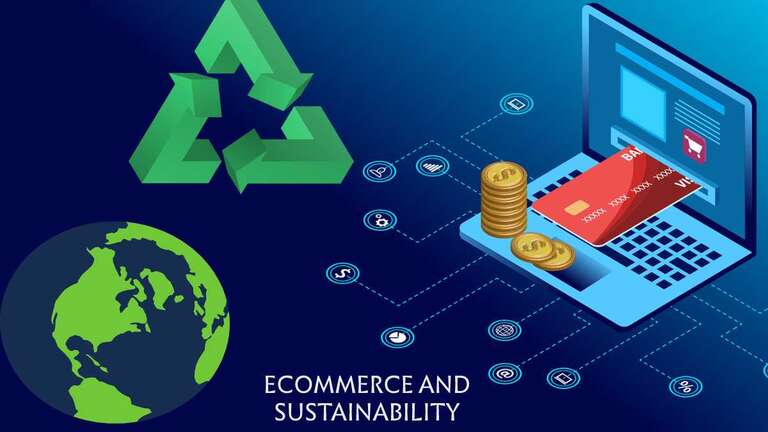
Maintaining environmental regulations, compliance, standards, and recycling & reselling, pressure to optimize processes and operations, supply chains, excellent reports that support decisions are key to sustain in the rapidly evolving eCommerce market. But, with the latest technologies change, and the introduction of a distributed system and cloud-based system, the introduction of Crypto, web 3.0 AI and AR, etc is becoming hard to sustain in simple ways as the world has revolutionized eCommerce in many ways. The introduction of Cryptocurrency, Artificial Intelligence, Augmented Reality and Web3.0 has really created a huge impact on eCommerce. Knowing these terms thoroughly in order to get the eCommerce business niche strengthened and to outperform competitors.

Let’s analyze these advanced technologies step by step: 

What is Cryptocurrency?

cryptocurrency

Cryptocurrency is a kind of digital payment. It is a direct payment method between buyers and consumers in exchange for their goods. Likewise, it is a kind of variable asset than fixed value like money. There is no central power like banks and other government institutions to control crypto in their hands, rather they are decentralized automated systems of many computers.

Cryptocurrency uses DLT- Distributed Ledger Technology which controls all the transactions. This system created a linear change of the users and transactions. Minute details are saved safely.

How cryptocurrency can benefit your eCommerce business?

Given the digital transformation of the current era, cryptocurrency is inevitable for eCommerce. You will get the following benefits if you allow your online store with cryptocurrencies:

  • Quick Transactions

This will allow your customers to get quick access to your market products. Unlike traditional market trading, it is time-saving for customers. You will get maximum flow of customers by creating an opportunity for ease of business. It is also a less complex and direct payment method.

  • Security Proof and identification

There is complex encryption in cryptocurrencies and data is stored in the blockchain which gives an identification of the creators and owners. This gives maximum security to your online customers as well as your eCommerce products. They lessen the risk of online fraud.

  • Broad Market Exposure

Cryptocurrencies are expanding throughout the world. They generate maximum traffic towards your eCommerce industry. You can triple your sales within seconds if you are linked with the crypto world. They are simpler, cheaper, and faster.

How Web3.0 can benefit your eCommerce business?

Web3.0 is the latest breakthrough in the online industry. It is the fastest, widest, easiest and cheapest mode through which customers can buy things online. 

Learn more: How e-Commerce will be affected by Web 3.0 and blockchain?

This fast digital world may benefit your eCommerce in the following ways:

  • User Friendly

Web3.0 allows internet users to hunt their market products in an easy way. It let customers know what are their interest-based market products and what types are available. It personalizes eCommerce shopping moods. Likewise, it gives enhanced internet options for eCommerce users.

Web2.0 becomes the source of generating millions of integrated businesses. Like cryptocurrency, it also worked in integration. This inter-linked data system lets you know about your target market audiences. Within no time, you are connected to thousands of eCommerce businesses around.

How AI will help you in boosting up your eCommerce

Robot AI

Artificial Intelligence has also brought a revolution to the field of eCommerce. Like crypto and web3.0, it is also one of the necessary parts of our eCommerce. It gives you the following plus points

  • 24/7 Improved Service

As a human, it becomes difficult for us to be active 24/7. We get exhausted. We need more employees as a solution for this problem. But thanks to AI, we have automatic mailing and messaging systems. These systems allow your customers to know that you are in or out. It saves our time to a great extent. Also, it saves our financial problems too.

AI has no parallel regarding its search procedure. It has let your business opt for smart searches. Your customers will have many options in the search bars whether they want to search from their voice, picture, or words.

Along with smart search, AI provides better resolutions of the market products. It also gives the option for a 3D view. Thus customers get no worry after having these smart AI tools.

How augmented reality (AR) will transform your eCommerce business model?

AR VR

With the enhancement of technology, eCommerce businesses are thriving today – more than ever before. According to eMarketer, 45% of retail businesses changed their business module into eCommerce. The report suggests that the unprecedented advancement in technology and Artificial Intelligence is the sole reason for it.

Augmented Reality (AR) allows customers to virtually try on and try off products from the comfort of their homes. Can you believe my last online purchase was through AR? I was looking for a red t-shirt and a retailer had the option to select their t-shirts and try them on – while sitting on the couch. So, I tried it on and it turned out to be the best fit for me. Guess what? I purchased the t-shirt!

This is how AR is transforming online shopping. It gives your customers:

So, if your business module has not introduced the AR shopping experience, today is high time to reassess your marketing strategies. Introduce AR to your business and see its magic.

The Bottom Line

Summarizing all the features of AI, web3.0, Augmented Reality, and crypto, it is plain that your eCommerce’s growth completely depends on these amazing newly digitalized techs. You must link and upgrade your eCommerce business with them. Missing out on either of them may cause you to lag behind in the competition. 

That is why, it is crucial as an eCommerce business – to reassess marketing strategies and see if your business model is missing any of these modern-day technologies. If that is a yes, today is the high time to introduce them in your marketing strategies and to leave behind your competitors in the eCommerce marketplace. Please let us know if you have any questions or suggestions, please subscribe to our YouTube Channel and look for other free Opencart extensions. You can also find us on Twitter and Facebook.

View in the browser of an email is directing people to the wrong links – Pardot

One of our clients requested us to check why their “View in the browser” link is not directing to the wrong links in the email of the Pardot. They told us that recently a member of their team sent out an email that works perfectly, however when you “view in browser” via the “click here” link at the top of the email the images stop directing people to the correct pages and default to their domain home page. The actual text links still work fine just the image links for them were not working.

Solutions

When we checked their email HTML we saw that their “View in the browser” is not linked correctly. They have appended the https:// with {{View_Online}}. It was like <strong>&lt;a href=”https://{{View_Online}}” target=”_blank”></strong>. So, make sure that while using the merge tag of view_online or adding code there are no extra codes for the href link. It should be something like the below:

<a href="{{View_Online}}" target="_blank">View in the browser</a>

In this way, we helped solve their view in the browser issue of the Pardot. Please let us know if you have any issues with Pardot email or Pardot landing pages or any kind of Pardot projects, you can email us at webocreation.com@gmail.com. Hope you liked this tutorial, please subscribe to our YouTube Channel and read more about Salesforce, Pardot, Marketo, and Hubspot. You can also find us on Twitter and Facebook.

Add Voice search for input box of form search – Opencart eCommerce – free extension

With the rise of Artificial Intelligence and Voice recognition, we can add the voice search directly into the form input field and perform the functionalities like searching, entering data, etc. Here we will show HTML code and then provide the Opencart free module.

How to add voice search for input form?

Following are codes that will provide you with the voice for the input field.

Voice form field
<style>
    .speech {
        float: left;
        border: 1px solid #ccc;
        border-radius: 10px 0px 0px 10px;
        box-shadow: inset 0 1px 1px rgb(0 0 0 / 8%);
        border-right: 0px;
        align-items: center;
        display: flex;
        height: 40px;
        padding: 0px 10px;
    }

    .speech img {
        width: 20px;
        position: relative;
        margin: auto;
    }

    #search .input-lg {
        height: 42px;
        line-height: 20px;
        padding: 0 10px;
        border-radius: 0px;
        border: 1px solid #ccc;
        box-shadow: inset 0 1px 1px rgb(0 0 0 / 8%);
        border-left-width: 0px;
    }

    .btn {
        height: 42px;
        border: 1px solid #ccc;
        padding: 0px 10px;
        border-radius: 0px 10px 10px 0px;
    }
</style>
<script>
    function startDictation() {
        if (window.hasOwnProperty('webkitSpeechRecognition')) {
            var recognition = new webkitSpeechRecognition();

            recognition.continuous = false;
            recognition.interimResults = false;

            recognition.lang = 'en-US';
            recognition.start();

            recognition.onresult = function (e) {
                document.getElementsByClassName('form-control')[0].value = e.results[0][0].transcript;
                recognition.stop();
                document.getElementsByClassName('btn-default')[0].submit();
            };

            recognition.onerror = function (e) {
                recognition.stop();
            };
        }
    }
</script>
<form>
<div style="display:inline-flex">
    <div class="speech">
        <img onclick="startDictation()"
            src="https://webocreation.com/wp-content/uploads/2022/02/voice-icons.png" />
    </div>
    <div id="search" class="input-group">
        <input type="text" name="search" value="" placeholder="Search" class="form-control input-lg" />
    </div>
    <div class="input-group-btn">
        <button type="button" class="btn ">GO</button>
    </div>
</div>
</form>

We have implemented the above code and made an Opencart free extension. Download and install the Opencart extension.

Once you download and install this opencart extension, then you will see the mic icon in your search input box.

Voice search input field

Once, you click on the mic icon, you will be prompted to give permission for the microphone by the browser.

microphone permission for the voice search by browser

Once, you click “Allow”, now it is ready to use and you can start speaking and it will show the text in the search input field. When we see the red dot in the browser then we can say the browser is listening. Here is an example, we speak “iPhone” and the input field is filled with “iPhone”

Voice recognition ready to use

Final Code in the Search file

The final code at the catalog/view/theme/default/template/common/search.twig will be like below:

<div id="search" class="input-group">
  <style>
        .speech {
            width: 15%;
            float: left;
            border: 1px solid #ccc;
            border-radius: 10px 0px 0px 10px;
            box-shadow: inset 0 1px 1px rgb(0 0 0 / 8%);
            border-right: 0px;
            align-items: center;
            display: flex;
            height: 40px;
        }
        .speech img {
            width: 20px;
            position: relative;
            margin: auto;
        }
        #search .input-lg {
            height: 40px;
            line-height: 20px;
            padding: 0 10px;
            border-left-width: 0px;
            border-radius: 0px;
            width:85%;
        }
    </style>
    <script>
        function startDictation() {
            if (window.hasOwnProperty('webkitSpeechRecognition')) {
                var recognition = new webkitSpeechRecognition();
                recognition.continuous = false;
                recognition.interimResults = false;
                recognition.lang = 'en-US';
                recognition.start();
                recognition.onresult = function (e) {
                    document.getElementsByClassName('form-control')[0].value = e.results[0][0].transcript;
                    recognition.stop();
                    document.getElementsByClassName('btn-default')[0].submit();
                };
                recognition.onerror = function (e) {
                    recognition.stop();
                };
            }
        }
    </script>
    <div class="speech">
        <img onclick="startDictation()"
            src="https://webocreation.com/wp-content/uploads/2022/02/voice-icons.png" />
    </div>
    <input type="text" name="search" value="{{ search }}" placeholder="{{ text_search }}" class="form-control input-lg" />
   <span class="input-group-btn">
     <button type="button" class="btn btn-default btn-lg"><i class="fa fa-search"></i></button>
   </span>
</div>

Some of the issues are:

  • All browsers do not support Voice recognition, even Firefox doesnot support it.
  • If the user doesnot allow the microphone then you cannot use the voice search
  • We have developed this Opencart extension based on Opencart default code so all theme may not support it.

Hope this module will help you improve your web and user experience. Let us know if you need any customization or have any questions or suggestions, please subscribe to our YouTube Channel and look for other free Opencart extensions. You can also find us on Twitter and Facebook.

How e-Commerce will be affected by Web 3.0 and blockchain?

Web 3 is the evolution of communication, Crypto for currency, DeFi for finance, NFTs for art and metaverse for internet. Web 3.0 is projected to have a massive influence on businesses and customers as well as how businesses market and sell their products and run their operations and probably how customers buy products and preserve their data and identity. The fundamental transition in Web 3.0 is from information-centric to knowledge-centric. Ecommerce, often known as electronic commerce, refers to transactions that take place through the internet. Ecommerce occurs whenever individuals or businesses buy or sell items or services through the internet.

Web 3.0

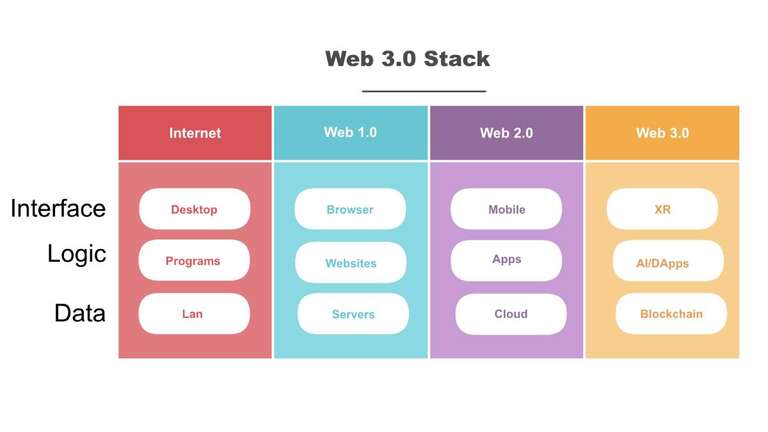
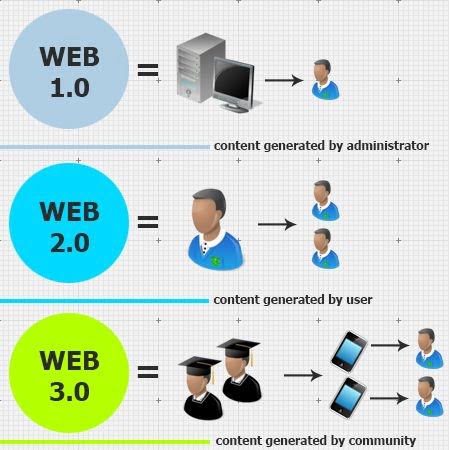
Web 1.0, 2.0, and 3.0 are the different versions of the web. And each edition has its own set of features. Web 2.0 is superior to Web 1.0, while Web 3.0 is even more sophisticated than Web 2.0. Since web 3.0 is evolution of communication and uses blockchain to store all the credentials that would be more secured data won’t get hacked or anonymously accessed as each and every piece of data is stored in blocks. This thing affects to eCommerce site in some positive way.

Here are some facts that cause e-Commerce to grow exponentially by web 3.0 and blockchain:

Flow of eCommerce in Web 3.0:

eCommerce flow web 3.0
Photo by XR Expo/unsplash.com

Let’s say you want to buy a sound system for your living room, you wear AR/VR and go to the Metaverse where you can create your own room model with NFT or use a Room scanner which will create your unique room, then you will search for the sound system that you can add in your room, get one to test in your room test it by adjusting the volume, etc if you don’t like it test another, once you liked it, you pay for the sound system with your Crypto and your sound system will be delivered to the home through the drone. Then, a log with setup in the blockchain that you are the one who owns this product, and you know from the blockchain that you have bought the authentic one as you can see who manufactured it. All of these are possible with web 3.0.

The above is just a use case that may happen as all of these technologies is new yet, so can advance to lots of things.

Read more: Proven Tips to Promote Your NFT Collections

Influence of web 3.0 in e-Commerce

Over the internet, quality material really matters. It was web 1.0 that let you know your market product client. Then through web 2.0, you are able to hunt whatever sort of market products. Finally, it is web3.0 that allows you to contextualize your existing knowledge according to your user’s needs. Web 3.0 unlike web 1.0 and web 2.0, not only connects information but data. It also transforms data into information. Web 3.0 systematically looks for what e-commerce clients search for. Web3.0 sophisticates search engines by highlighting the needed themes and various updated search facilities.

Further, web 3.0 is helping its e-commerce community by providing limitless data of Cloud, allowing personal ideas for third parties, and providing a protocol for data connection. Web 3.0 also allows customization of web content for its e-commerce community. Clients can customize anytime anywhere their business-related content with a highly developed web 3.0 data blockchain.

Business Model Strategies

Strategic thinking has been introduced for e-businesses. Growing technological development especially web3.0 has sophisticated business models for e-commerce. Business model strategy is as same as architecture.

Business Model Strategies
Image by August / Pexels

Hawkins says that “business model can be seen as the architecture of a business”.

Mr. Chung says “business model is an evaluation of various bodies of commerce like products, resources, clients, and activities”.

Web3.0 facilitates their e-commerce partners for a better business model strategy.

  1. Having access to customers data for e-business purposes
  2. Making strong Customers-Client chains
  3. Developing high positions for all its e-commerce partners
  4. Customizing customers choices
  5. Customizing clients choices

Licenses and Subscription

Web 3.0 is very unique in its performance. It allows its partners to perform from various places. For this purpose, web 3.0 provides licenses for its clients. Though the license is paid one it is reliable.

You can use data inside the application still without cost. Only the data that is used outside will be charged.

The licensing strategy for web 3.0 users will let its client modify their market product. Clients can increase or decrease their market products according to demands and supply.

Subscriptions are alternative forms of license. Subscriptions facilitate web 3.0 e-commerce clients to choose options at their own convenience.

This helps clients sell their products directly. One-time sales can transform into recurring ones.

Subscriptions have the following plus points for e-commerce clients and customers

  1. Limited times offer
  2. Choice based subscriptions
  3. Easily handled by both clients and customers
  4. Automatic renewals
  5. Clear guidelines for every subscription

Providing Premium Services

This business model provides free basic services for its eCommerce clients. On using the free services, clients can swing themselves to the purchased version. 

Providing Premium Services
Image by Gustavo / Pexels

Clients after using the free version, switch to paid ones. This is the reason, clients recommend web 3.0 premium services to others as well. Premium services provide satisfaction to all startup makers online. Also, it strengthens trust between buyer and user.

See More: Phases in products selling life cycle of eCommerce in 2022 for start-up business

Advertisements

Advertising your business is the first most need. You can boost up your e-commerce based market products by advertising them on various social media platforms.

Web 3.0 acts as charging for such advertisements in e-business. It produces humongous revenue from such advertisements.

Web 3.0 allows the ads to work in a dynamic way due to the shuffle in the behavior of customers. It allows users to let you know about their market brands while you are surfing randomly on social media sites. 

Web 3.0 is going to affect e-commerce from all perspectives. Web 3.0 provides different strategic ideas which can boost e-commerce in no time. Among these strategies, you can license your startup. You can use a subscription strategy for your market product online. Web 3.0 also allows you to advertise your e-business. You can either use premium services too. All these eCommerce strategies are provided by sophisticated web 3.0. Therefore web 3.0 has a magnificent effect on all sorts of eCommerce.

Let us know if you have any other startup guides to thrive or have any questions or suggestions, please subscribe to our YouTube Channel and look for other free Opencart extensions. You can also find us on Twitter and Facebook.

Auto Addition of Product by clicking in link which will redirect clicker directly to checkout page – Free Opencart Module

Opencart free extension which auto-add product by clicking in the link which will then redirect clicker directly to the checkout page. This can be useful when you are promoting products in email or other social platforms or blogs, so when they click they are directly sent to the checkout page so it acts as a buy now button on the product page. This can be used for one product which you need to redirect directly to the checkout page. This module provide functionalities to add products to the shopping cart from query string URL parameters.

Download:

Installation:

  • Download the extension by clicking above download button
  • You will get a zip file named “linkclick-checkout-2022.ocmod.zip”
  • Go to the Opencart admin >> Extensions >> Installer >> Upload this zip file
  • Then, Navigate to Extensions >> Modifications >> Clear the cache.
  • The module is ready to use.

Documentation:

Once, you installed the extension, now you can use the link or URL like below:

http://yourwebsite.com/index.php?route=checkout/buttonclickcheckout/add&product_id=58&options=246_71-247_72&quantity=2

where,

product_id=58, 58 is the product id

quantity=2, number of quantities to pass, the default value is 1. If you want to add only one quantity then no need to pass but if you want to add more quantity when clicked then you need to send quantity value as well.

options=246_71-247_72, as the product can have multiple options and option values, so it is separated by _ and -. If you don’t have options then you don’t need to pass it as it is optional. If you have options then it is quite tricky.

If your option is Size (id=246) having option value Small (id=71) and another option is Color (id=247) having option value black.

Need to take care of dashes and underscores, dashes separate between option and underscore separate between option and option value.

See more: Combined Checkout steps, shipping and payment addresses, and methods on Opencart

Use case: Are you doing email marketing then this will be very useful?

This will be very useful for email marketing. You create an audience and build your list to send your email, now you started to make a beautiful design for email and manage great content and subject line. Create a CTA.  Your call(s) to action is one of the most important pieces of content in your email. Outside of getting your subscribers to open your email (via a compelling subject line), your next goal is to get your subscribers to click on your content. 

E-mail is opened and the email reader is eager to click your CTA but where do you want to direct the click. Taking OpenCart into consideration it only gives the product detail page, category page, the home page, etc but it does not provide links that directly add the product to the cart and directly take them to the checkout page. So this module provides you with a link that directly adds products into the cart and redirects them to the checkout page which will lead to an increase in the conversion rate.

 Hope this module will help you. Let us know if you need any customization or have any questions or suggestions, please subscribe to our YouTube Channel and look for other free Opencart extensions. You can also find us on Twitter and Facebook.

5 Proven Tips to Promote Your NFT Collections

Having the most beautiful NFT collection is not self-sufficient. What really matters is how you market your NFT. Marketing can break or make your NFT collection. The world you live in today is so fast. Therefore you need to be creative fast to cover your marketing weaknesses. Thus, you can make your work noticeable. You really need to be a cleverer one. 

NFT collection promotion ideas
Picture by Andrey / Unsplash

To take your NFT collections to the next level, we have gathered 5 proven tips. Here are those 5 proven tips to promote your NFT collections in no time:

Make a Press Release

Press releases are quite useful in promoting NFTs. A press release is outsourcing for your NFT. It will gather more and more audiences for you.

Normally they are in written format and released by the Public Relation department. But they are paid services. This is the reason when you advertise your NFT in a famous newspaper, it will boost your NFT as an authentic one. As you know there are thousands of scams happening in the NFTs world.

You can use the given well-known sources for the press release:

  • Newswire
  • eReleases
  • PR Distribution

Nevertheless, we urge you to be cautious when press releasing your NFT. This means you have to be careful in selecting the standard newspapers available. Do your research properly prior to marketing your NFTs through a press release. 

Make Use of the NFT Calendar

This is really a booster for your NFT project to hit on the mark. It takes seconds to add the drop on your NFT calendar.  Fortunately, you will be getting it free of cost. And you can advertise every kind of NFT project using NFT calendars.

Here are some key points that will help you in arranging the NFT calendar:

  • Share the link to your press release
  • Share the title of your NFT collections
  • Give details of the NFT creations
  • Give proper descriptions to your NFT
  • Create an eye-catching visual for your NFT drop
  • Mention the time and date for the NFT collections
NFT collection promotion calendar
Picture by Tezos / Unsplash

It is pertinent to mention here that NFT calendars are free to use and play a pivotal role in promoting your NFT collections in the longer run. 

Work in Collaboration

Working with other artists or studios is, fortunately, freely available. This will provide an opportunity for you to work with potential investors. It doubles your marketing energy.

You can exchange your audiences with other parties. That is what gives you super promotion and super fans in no time. Do not feel hesitant at all. Explore your partner’s potential and learn NFT promotions’ tricks.

Use Giveaways

Giveaways are really crucial for NFT marketing. They act as a driving tool to boost your NFT collections. They make the NFT audience aware of what your brand is up for. 

Giveaways are always free for your audience. There are specific rules in your giveaway. These rules compel those who want to participate in it. For example, they have to follow, tag, like, comment, mention or share your NFT collections if they want to win your NFT giveaway. Consequently, your business reaches out to hundreds of users.

NFT giveaways
Picture by Tezos / Unsplash 

Have Multiple Marketing Strategies

You can use crowd marketing or multiple marketing strategies for your NFT brand promotions. You can reach out to your target audience through other related brands.

You need to join relevant online events and discussions. This will directly make your involvement fruitful with your target market audiences.

You should keep posting qualitative content across various social media platforms about your NFT collections.

 Engage your audience as much as possible. Ask them questions and let them ask questions. In this way, your NFTs will get booster promotions automatically. In the end, you can simply promote your NFTs through various means as per your necessity and ideas.

Summing Up

Having cool NFT collections is a worthwhile asset. However, it is inevitable to properly market your NFTs. Some of the most proven 5 ways are: to have multiple marketing strategies, give giveaways, work in collaborations, make a press release, and use the NFT calendar. We are optimistic that these proven tips will definitely promote your NFTs in no time.

Show products of Category OpenCart version 2 & 3 module for free

Opencart free extension which displays products of a category. Another free Opencart free module to “Show products of Category OpenCart 2 & 3 modules for free” when enabled on layout then you will be able to see category title from admin as title and category products you selected in the contents of module section. You can show as many category products as you like as we can activate as many modules as we want as this is the opencart multi-instance module. Sort orders are managed as per the product sort, limit, image height, and width are handled from the module setting.

We have activated two modules on the home page and it looks like the image below:

show category products at home page
category-products-show

Admin section will look like this:

category products show admin setting Opencart free module
category-products-show-admin

Download “Show products of Category OpenCart module for free” from the link below:

Download Category Products extension Opencart 3 for free

Download Category Products Module OpenCart 2.3.0.2 for free

Download Show products of Category OpenCart 2 module for free

This is an extension for OpenCart 2.0 that we created to show products of the chosen Category.

Installation:

  1. Unzip the downloaded folder.
  2. Upload the files in the root folder to your server, no file is overwritten.
  3. Then activate the “Category Products” module.

Activating the Category Products module:

  1. After uploading files to servers, it’s time to install the “Category Products” module
  2. We are showing the “Category Products” module at the top column of the home page (Home Layout).
  3. Go to Admin section
  4. Then click on Extensions on the left menu
  5. After that Select Modules from the drop-down and go to “Category Products” in the modules list
  6. Then click the Green button for the “Category Products” to install the module (see the image below)
  7. Then click the blue edit button.
  8. Then enter the name that you want to show in the title of a module at the presentation layer.
  9. Then in the category name field start typing category name and it will show the category name and choose the category (Only one category will be shown at the front although you insert many categories so be sure to insert only one category name so that there is no conflict).
  10. Then enter the height and width for the images of the products to show.
  11. After that, you will see the form which has the status field, select “Enabled” and then click the Save button.
  12. Your module is active and is ready to use in the layout.

Setup layout for the sidebar “Category Products” module at the top column of home page:

  1. From the admin, section goes to Design >> Layouts.
  2. You will see a list of layouts, from which edit the Home layout.
  3. Then click Blue add the button to add rows at the module section which is shown in the image below:
  4. Second, you choose the Category Products in module column and Content Top in the Position column and insert the sort order as required.
  5. Then click save button

How to sort Products for the “Category Products” Module?

  • Insert the sort order for products while inserting the product and products are sorted as per it.
  • Catalog >> Products >> Edit/Add >> Data tab

Check this video if you are having any installation problems:

Your custom category page is ready with the Category Products module in the content top column.

In this way, you can display products of category, please let us know if you have any other requirements of Opencart extension then we try our best to provide you for free. You can visit our free opencart module category for more free modules. Let us know if you have questions or concerns so that we can help you out. Till then please subscribe to our YouTube Channel for Opencart video tutorials. You can also find us on Twitter and Facebook.