Latest AI Trends Shaping the Future of Business and Technology
 Rupak NepaliPublished Apr 15, 2026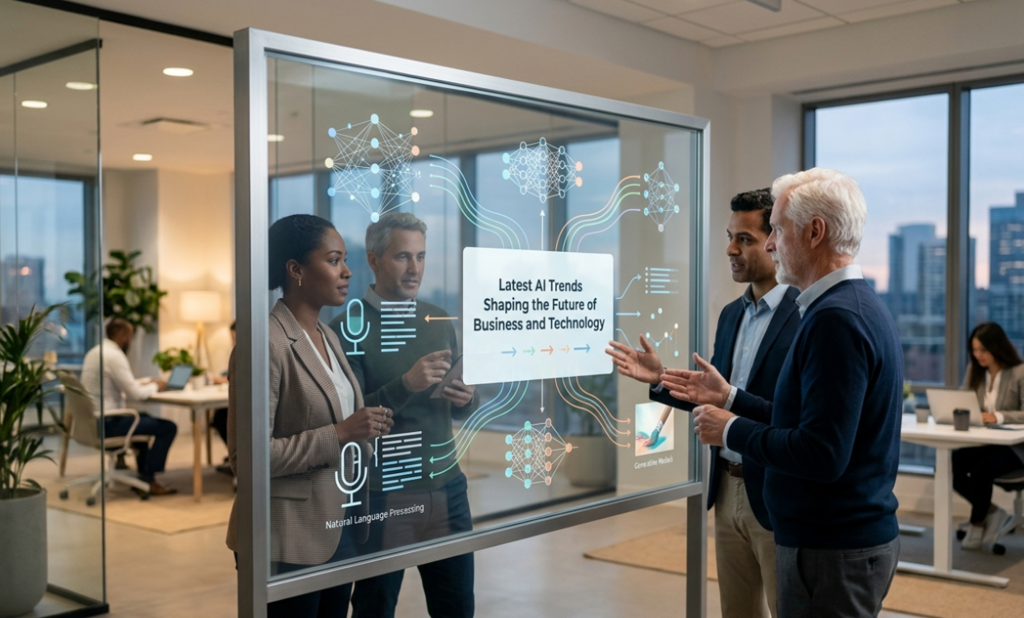
Imagine a robot handles all your daily tasks, from automating repetitive tasks to alerting you about any malpractices. Sounds right…!? The good news is that artificial intelligence is here to help you with all your administrative tasks, predictive analytics, content generation and marketing, handling customer service, and more.
AI trends help reduce operational costs by about 40% and allow businesses to focus more on productive work rather than worrying about repetitive tasks. Are you looking for the current AI trends for 2026, or for AI ideas that rule business and technology? Do not worry, you have landed on the right page. In this article, we have outlined how the latest artificial intelligence trends are shaping the business and technology landscape!
Let’s delve!
Quick note:
- Among 8/10 companies, at least one has already adopted AI in at least one business function. This shows the growing dominance of AI trends.
- AI supports business operations in several tasks, like predictive analytics, enhanced customer experience, and process automation.
- Agentic AI, Multi-Modal AI, AI-native software development, etc., are reshaping the future of businesses.
- Operational efficiency, data-driven decision-making, and improved supply chain and logistics are among the impacts on businesses.
- Autonomous AI agents, hyper-personalization, and Explainable AI are the latest AI trends that will rule the business and technology in the coming few years.
Why AI Matters In Modern Businesses
Did you know the global AI market is poised for a significant shift and is projected to reach $2 trillion by the end of 2026? This enables AI in modern businesses, including operational efficiency, enhanced decision-making, cost savings, and improved customer experience. So, AI is not just a tool you ignore; it’s more like a smart assistant that handles everyday tasks at minimal cost.
AI automation in business streamlines operations by implementing tools like ChatGPT to automate tasks such as customer service, data entry, and lead generation.
Now you must be thinking about how to implement AI in an existing business or a startup. Here we created a step-by-step guide, explore!
- Identify Problem
Before implementation, understand the business requirements: how AI will support your business, what problems it solves, and how it will enhance business workflows.
- Focus on sales first
Start by identifying the clients and target audience, and define the offering before mastering all technical aspects.
- Learn key tools
Don’t just rely on AI; learn the tools and techniques for using it in business.
- Leverage AI Agents
Implement AI tools for specific, high-value tasks, such as voice agents for qualifying incoming phone leads.
- Build & Iterate
- Start with simple, high-impact automations that yield immediate ROI.
Top AI Trends Shaping Business & Technology
Let us delve into the AI trends driving the current market.
Agentic AI & Autonomous Systems
Businesses spend a lot of time and money on repetitive tasks and upfront investments, which can also be handled by agentic AI, such as chatbots, that support customer queries instantly and make data-driven decisions in minimal time. This approach will help businesses move with lower spending costs.
Multimodal AI Integration
Multimodal AI is a type of machine learning that processes. It combines multiple data types, such as text, images, audio, video, and sensory input, to better understand context and achieve higher accuracy than unimodal models.
Cost-Aware AI Engineering
Cost-aware AI engineering is a discipline that treats financial costs such as token usage, API calls, and GPU hours as a first-class engineering and business metric, alongside performance, latency, and accuracy.
AI+Edge Computing
AI edge computing processes data locally on devices such as IoT sensors, cameras, or smartphones, rather than in a centralized cloud. Analyzing information near the source enables near-instantaneous decision-making and enhances privacy, making it crucial for autonomous vehicles, robotics, and real-time industrial automation.
Quantum-Adjacent AI Research
Quantum AI combines quantum computing with artificial intelligence to solve complex problems beyond the reach of classical computers, accelerating AI model training and optimizing vast, complex systems in real-time.
How AI Trends Impact Different Sectors & Industries
As AI evolves, modern businesses and industries are adopting it across their workflows. Let’s explore the most impactful use cases of AI in the world’s prominent sectors.
AI in Healthcare
AI helps the healthcare sector, and clinics diagnose and treat through image analysis, predict molecular interactions, identify potential drug candidates to support drug development, and enable AI-powered wearables to help doctors monitor patients’ health in real time, etc.
This implementation allows healthcare professionals to work more effectively and treat patients in real time through real-time monitoring.
AI in Transportation
AI technologies are making transportation more autonomous and safer. It helps vehicles move more intelligently, like alerting you to traffic, notifying you to refuel, and integrating GPS for location detection and more.
AI in Finance
AI is transforming banking and financial institutions by enhancing decision-making and security. AI in finance securely manages records, uses machine learning algorithms to detect unusual patterns and behaviours in real time, and automates claim processing.
These AI in finance solutions offer a personalized user experience, alert customers to any malfunctions, help them apply for loans and insurance, and provide instant approval, and more.
AI in Manufacturing
Manufacturing needs smart sensors for smooth workflow operations. Now, modern manufacturing industries are integrating AI into their operations, boosting productivity. Smart sensors help manufacturers predict equipment failures in advance, preventing disruptions and providing real-time insights.
AI in Retail/eCommerce
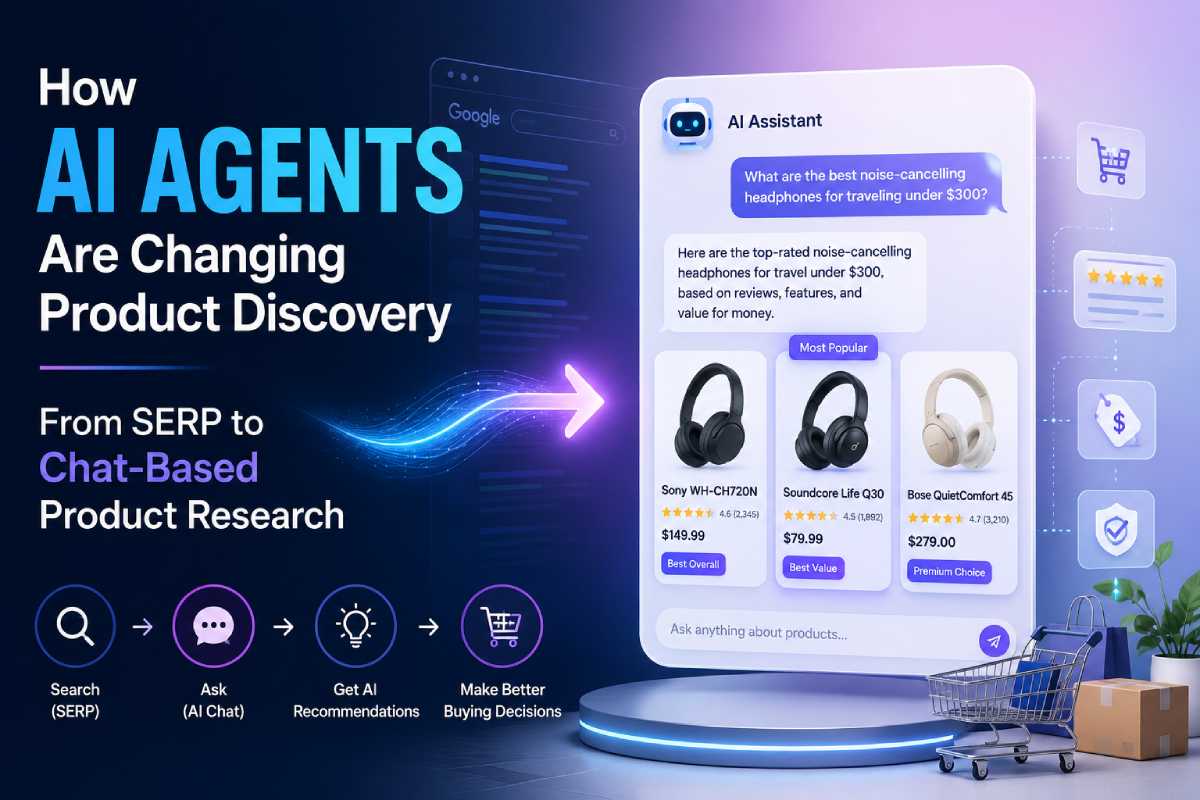
AI in the ecommerce and retail industry helps to analyze customer behaviour. With visual search, customers can easily find products by image, and it helps retailers track sales and product demand. These artificial intelligence systems just work like smart, advanced personal assistants who keep track of every step of the operation.
AI in Gaming
Game lovers often like online games with excellent graphics, as well as real-world experience with voice assistants. Artificial Intelligence is reshaping the gaming industry by enhancing player experiences and crafting more interactive environments. This integration allows users to witness more personalized experiences.
So, AI is now an assistant that will hold your business tasks while you can care-free focus on growing needs and success for the organization.
Future of AI in business
Do you know that Statista shows the AI market is valued at $335 billion to $500 billion in 2026 and will grow to $1.68 trillion by 2031? This data shows that AI will be a game-changer in the coming years, boosting industry revenue. So, AI is something we cannot ignore if we want to stay competitive in the market.
AI is like our well-wisher or best friend, helping your business stay ahead and work beyond. It cares about your systems and software and ensures your data is kept secure. Overall, AI-powered business solutions automate workflows, enhance decision-making, and improve customer experiences.
Conclusion
The latest AI trends show one clear thing: AI is becoming a natural part of how businesses grow and innovate. With fast-moving AI technology innovations, rising generative AI trends, and evolving machine learning trends in 2026, companies are rethinking how they work.
From AI in digital transformation to its growing impact across industries, the change is everywhere. The key is simple: those who adapt to AI today will lead tomorrow.

Author of four Opencart book.
The recent are Opencart 4 developer book and Opencart 4 user manual