Top Trending Products to Sell Online in 2026 (Data‑Backed Ideas)
 Rupak NepaliPublished Jun 28, 2026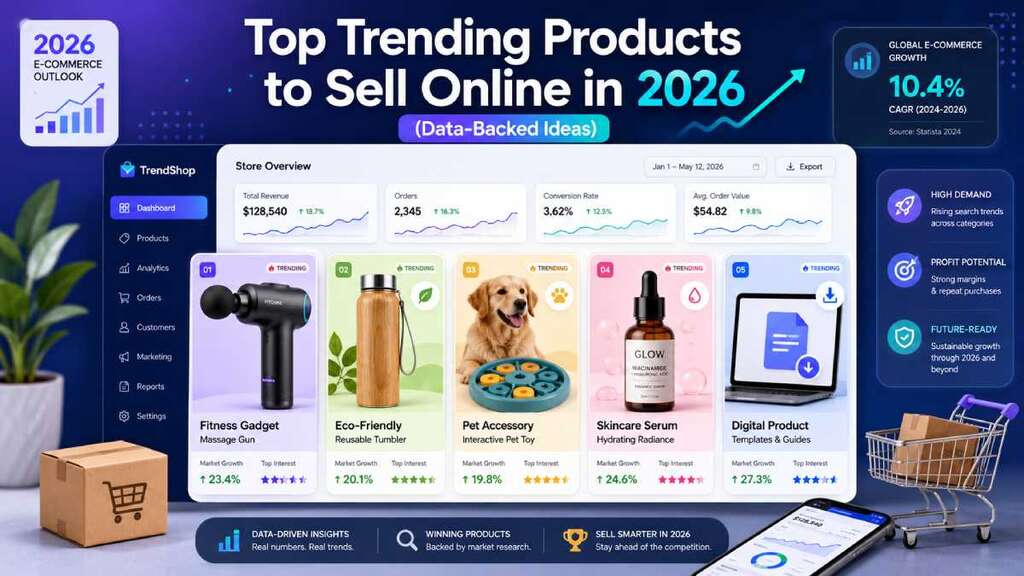
Introduction: Why “data‑backed” trending products matter in 2026
- Briefly explain why chasing random “winning products” is risky (hype, short‑lived fads, heavy competition).
- Introduce your angle: products chosen based on real signals—search trends, marketplace demand, and repeat purchases.
- Promise the reader: by the end, they’ll have several product ideas plus a simple framework to judge whether a product is truly worth testing.
How to identify trending products (your method)
Set up credibility and give context before listing products.
- 2.1. Core data signals to watch
- Search interest (e.g., Google Trends): rising vs flat vs declining.
- Marketplace demand: bestseller lists, review counts, ratings.
- Social proof: TikTok/Reels, YouTube, niche communities showing usage.
- Repeat purchase/consumable potential: products people buy again.
- 2.2. Filters to avoid “fake winners”
- Avoid overly saturated products where everyone sells the same item at the same price.
- Prefer products with specific niches (e.g., “pet anxiety blanket” vs generic “blanket”).
- Consider shipping complexity, return risk, and support needs.
- 2.3. How to match products to your strengths
- Print‑on‑demand vs dropshipping vs stocking inventory.
- Physical vs digital products (depending on your skills, capital, and audience).
3. Health & wellness: functional products with real demand
Introduce the category: people keep spending on health, fitness, and better sleep; these products show sustained search and marketplace demand.
- 3.1. Smart and convenient fitness gear
- Examples: app‑connected yoga mats, posture correctors, resistance band sets bundled with digital workouts.
- Data angle: increasing interest in at‑home fitness and “smart” accessories; look at reviews and growth in “home gym” products.
- 3.2. Recovery and pain‑relief gadgets
- Examples: massage guns, neck massagers, heating pads with ergonomic designs.
- Explain why: high price tolerance, strong gift potential, lots of repeat word‑of‑mouth when they work.
- 3.3. Portable wellness devices
- Examples: portable blenders, air purifiers for small rooms, sleep‑aid devices (white‑noise machines, light alarm clocks).
- Suggest how to differentiate: bundle with guides, target specific niches (students, office workers, parents).
For each sub‑section, add:
- Who it’s best for (dropshipper, brand builder, boutique store).
- Key risk: regulation, quality, returns—and how to mitigate.
4. Pet products: evergreen, emotional, and shareable
Explain why pet owners are high‑value customers and why pet spending keeps growing.
- 4.1. Interactive pet toys
- Examples: treat‑dispensing toys, smart ball launchers, puzzle feeders.
- Data angle: recurring presence in trend lists; strong engagement on social posts.
- 4.2. Functional pet gear
- Examples: slow feeder bowls, car seat covers, travel carriers, GPS tags.
- Show how these solve real problems (choking risk, car mess, safety) and can be marketed with educational content.
- 4.3. Personalized pet accessories
- Examples: custom name tags, embroidered harnesses, printed pet portraits, personalized bowls or blankets.
- Explain synergy with print‑on‑demand and how personalization raises perceived value.
Include:
- Upsell ideas (bundles: toy + accessory, travel kit).
- Content ideas: Instagram/TikTok showcasing pets using the products.
5. Beauty & skincare “ingredient” products
Frame the trend: consumers are more informed and look for specific ingredients, not just generic “cream.”
- 5.1. Ingredient‑focused skincare
- Examples: peptide serums, ectoin moisturizers, niacinamide toners, and multi‑active serums targeted at specific concerns.
- Mention that search interest around certain ingredients has been rising, and product reviews often mention ingredients by name.
- 5.2. Niche beauty tools and accessories
- Examples: facial massage tools, gua sha sets, travel‑friendly skincare organizers, refillable travel bottles.
- Explain how these complement consumable products and can be sold as bundles.
- 5.3. How to stay compliant and trustworthy
- Emphasize clear labeling, honest claims, and sourcing from reputable suppliers.
- Suggest partnering with white‑label labs or established manufacturers rather than ad‑hoc suppliers.
Add:
- Branding tip: lean into education and “skincare routine” content.
- Monetization options: starter kits, subscription refills, bundles.
6. Eco‑friendly & reusable products
Explain the long‑term sustainability trend and how it shapes purchasing decisions.
- 6.1. Everyday sustainable swaps
- Examples: bamboo tumblers, reusable water bottles, stainless steel straws, beeswax wraps.
- Show how they align with “small lifestyle upgrades” people share on social media.
- 6.2. Personalized eco gear
- Examples: custom‑engraved tumblers, personalized reusable bags, and eco‑gift sets.
- Talk about combining sustainability with emotional personalization for higher margins.
- 6.3. Eco‑friendly phone and tech accessories
- Examples: biodegradable phone cases, laptop sleeves made from recycled materials.
- Point out that tech and sustainability together hit strong buyer intent.
Include:
- Branding angle: explain carbon footprint, materials, and impact.
- Cross‑sell: bundles for “starter eco kit,” travel kits, and office eco packs.
7. Tech accessories & small electronics
Position this category as “practical tech,” not hype gadgets.
- 7.1. Everyday mobile accessories
- Examples: wireless chargers, MagSafe accessories, high‑quality phone cases, cable organizers.
- Explain strong, ongoing demand due to device turnover and damage/upgrade cycles.
- 7.2. Micro‑gadgets for home and office
- Examples: mini‑fridges, USB desk fans, LED desk lights, smart plugs.
- Show how they connect to work‑from‑home and productivity trends.
- 7.3. How to compete without racing to the bottom on price
- Bundle products (e.g., “work‑from‑home starter kit”).
- Focus on design, durability, or niche targeting instead of generic listings.
Add:
- Content ideas: “desk setups,” “phone upgrade kits,” “productivity hacks” posts and videos.
8. Personalized and print‑on‑demand products
Highlight that customization and emotion give strong staying power.
- 8.1. Custom apparel and accessories
- Examples: personalized hoodies, family name shirts, location‑based designs, event merch.
- Explain low inventory risk with print‑on‑demand services.
- 8.2. Custom home décor
- Examples: custom wall art, family name signs, map posters, milestone prints (birth, wedding, anniversary).
- Emphasize giftability and Q4 seasonality.
- 8.3. Event‑based products
- Examples: wedding gifts, baby shower gifts, graduation products.
- Show how seasonal events can drive spikes.
Include:
- How to stand out: original designs, language/localization, niche communities.
- SEO angle: long‑tail keywords like “[city] skyline poster” or “[pet name] bandana”.
9. Digital products that save time
Explain why digital products have high margins and scale well.
- 9.1. Templates for productivity and business
- Examples: Notion setups, spreadsheet calculators, social media planners, and ecommerce store audit checklists.
- Highlight that templates selling “time saved” tend to do well for entrepreneurs, creators, and students.
- 9.2. Small tools and micro assets
- Examples: icon packs, design kits, pre‑built email flows, automation scripts for common tasks.
- Discuss targeting specific platforms (Shopify, Magento, WooCommerce) to match your existing audience.
- 9.3. Bundles and memberships
- Sell bundles of templates or small subscription access to ongoing updates.
- Connect them to your blog content and tutorials.
Add:
- Cross‑promotion: include CTAs in your blog posts and YouTube/videos.
- Note the appeal of “earn money online” and “save time” keywords.
10. How to choose the right product for you
Bring everything together in a simple decision framework.
- 10.1. Align with your skills and resources
- If you’re strong in design → print‑on‑demand, and digital templates.
- If you’re strong in logistics/sourcing → physical goods and bundles.
- 10.2. Test small, measure quickly
- Validate with small ad tests, influencer seeding, or marketplace listings.
- Track key metrics: click‑through rate, add‑to‑cart, purchase rate, and refund/return rate.
- 10.3. Think long‑term, not just “hype”
- Prefer categories with evergreen demand (pets, wellness, productivity) over one‑week TikTok trends.
- Keep iterating products within a niche instead of constantly switching niches.
11. Conclusion + CTA
- Re‑emphasize that trends are useful, but data + niche focus + execution matter more than “magic” products.
- Encourage readers to pick one category and one product from the list to research and test next week.
- Invite them to explore your other posts on ecommerce (e.g., checkout optimization, security, starting an online store) to help them actually launch and grow.

Author of four Opencart book.
The recent are Opencart 4 developer book and Opencart 4 user manual