How AI Agents Are Changing Product Discovery: From Search Results to Chat-Based Shopping Research
 Rupak NepaliPublished Jul 8, 2026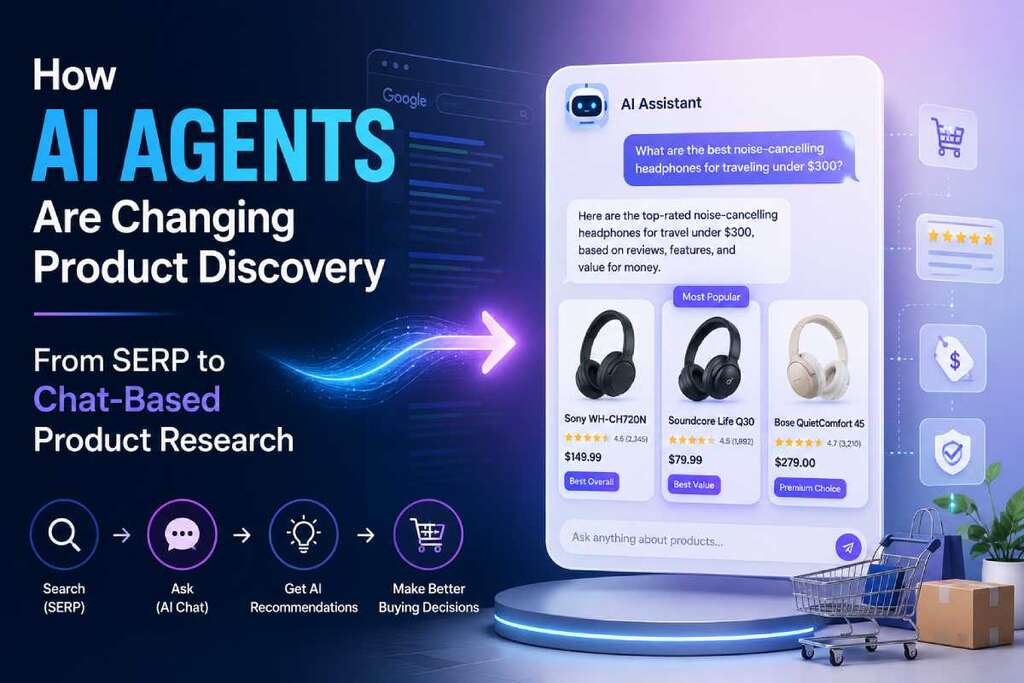
For more than two decades, ecommerce discovery followed a predictable pattern:
- A customer searched for a product.
- A search engine returned a list of links.
- The customer opened multiple tabs.
- They compared products, prices, reviews, and features.
- Eventually, they made a purchase decision.
That model is changing rapidly.
AI agents and conversational assistants are transforming how consumers research products, compare options, and decide what to buy. Instead of browsing dozens of search results pages, shoppers increasingly ask an AI assistant a question and receive personalized recommendations in seconds.
The shift from traditional search engine results pages (SERPs) to chat-based product discovery may become one of the biggest changes in ecommerce since mobile shopping.
From SERP to Conversation: The Old vs New Discovery Flow
Traditional SERP‑Based Discovery
In the model most of us grew up with:
- You type a query into a search engine.
- You see a list of links (brands, retailers, marketplaces, blogs).
- You click, compare, read reviews, and decide.
For ecommerce, the battle for discovery was mostly about:
- Winning keywords in SERPs (SEO).
- Winning paid ads on those same keywords.
- Optimizing product pages to convert once you click through.
Search engines and marketplaces controlled the “surface” (the SERP), and you optimized your listings to fit that surface.
AI Agents Are Becoming Research Assistants
Modern AI assistants are beginning to perform the research process on behalf of customers.
Instead of searching: “best laptop for graphic design under $1,500”
Consumers may ask:
“I am a freelance designer who travels frequently and needs a lightweight laptop with excellent battery life and strong performance for Adobe applications. What are my best options under $1,500?”
An AI agent can analyze:
- Product specifications
- Reviews
- Pricing
- Customer sentiment
- Performance benchmarks
- User preferences
The result is not ten blue links. The result is an answer.
From Search Engines to Answer Engines
Traditional search engines optimized for relevance and authority. AI-driven discovery platforms optimize for usefulness and context. Instead of asking:
- Which page ranks highest?
- Which website has the strongest backlinks?
AI systems increasingly ask:
- Which answer solves the user’s problem?
- Which recommendation fits the customer’s situation?
- Which product best matches stated preferences?
This transition is often described as moving from SEO to AEO (Answer Engine Optimization). Businesses that create clear, structured, and trustworthy content are more likely to appear in AI-generated recommendations.
Personalization Happens Earlier in the Journey
Traditional search treated many users similarly. AI agents introduce deep personalization from the very beginning. A customer may ask: “Recommend running shoes for a beginner training for a marathon who has flat feet and prefers extra cushioning.” The recommendations can incorporate:
- Experience level
- Budget
- Location
- Preferences
- Purchase history
- Intended use case
This creates a discovery experience that feels closer to speaking with an expert salesperson than using a search engine.
Product Pages Must Become AI-Friendly
Many ecommerce product pages were designed primarily for human visitors.
AI systems require content that is:
- Structured
- Clear
- Factually accurate
- Easy to interpret
- Rich in product attributes
Important product information includes:
- Dimensions
- Materials
- Technical specifications
- Compatibility
- Shipping details
- Return policies
- Customer reviews
- Availability
Structured product data is becoming increasingly important because AI agents rely on high-quality information to generate recommendations.
The Rise of Conversational Commerce
Consumers increasingly expect to ask questions naturally.
Examples include:
- Which laptop is best for engineering students?
- What camera works best for wildlife photography?
- Which stroller fits in a compact car trunk?
- What CRM software is best for a small business with fewer than ten employees?
Instead of navigating category filters and comparison tables, users expect conversational guidance.
This trend is accelerating the growth of conversational commerce experiences.
Comparison Content Is Becoming More Valuable
AI agents thrive on comparison data.
Content formats likely to perform well include:
- Product comparisons
- Best-of lists
- Buying guides
- Pros and cons analysis
- Use-case recommendations
- Industry benchmarks
Examples:
- Best ecommerce platforms for startups
- OpenCart versus WooCommerce for B2B stores
- Best AI tools for ecommerce customer service
Content that helps customers make decisions becomes highly valuable in AI-driven discovery environments.
Reviews and Trust Signals Matter More Than Ever
AI agents increasingly analyze customer feedback to understand product quality and customer satisfaction.
Signals that influence recommendations include:
- Customer reviews
- Verified purchase feedback
- Return rates
- Product ratings
- Brand reputation
- Expert opinions
As a result, businesses must actively manage customer experience and reputation.
Poor reviews may impact not only conversions but also future AI recommendations.
Brand Authority Becomes a Competitive Advantage
AI systems favor sources that demonstrate expertise and trustworthiness.
Businesses can strengthen authority by publishing:
- Original research
- Industry data
- Technical documentation
- Case studies
- Tutorials
- Expert insights
Topical authority is becoming one of the strongest long-term advantages in AI discovery ecosystems.
What Ecommerce Businesses Should Do Today
1. Improve Product Data Quality
Ensure products contain:
- Complete specifications
- Detailed descriptions
- Accurate attributes
- Frequently asked questions
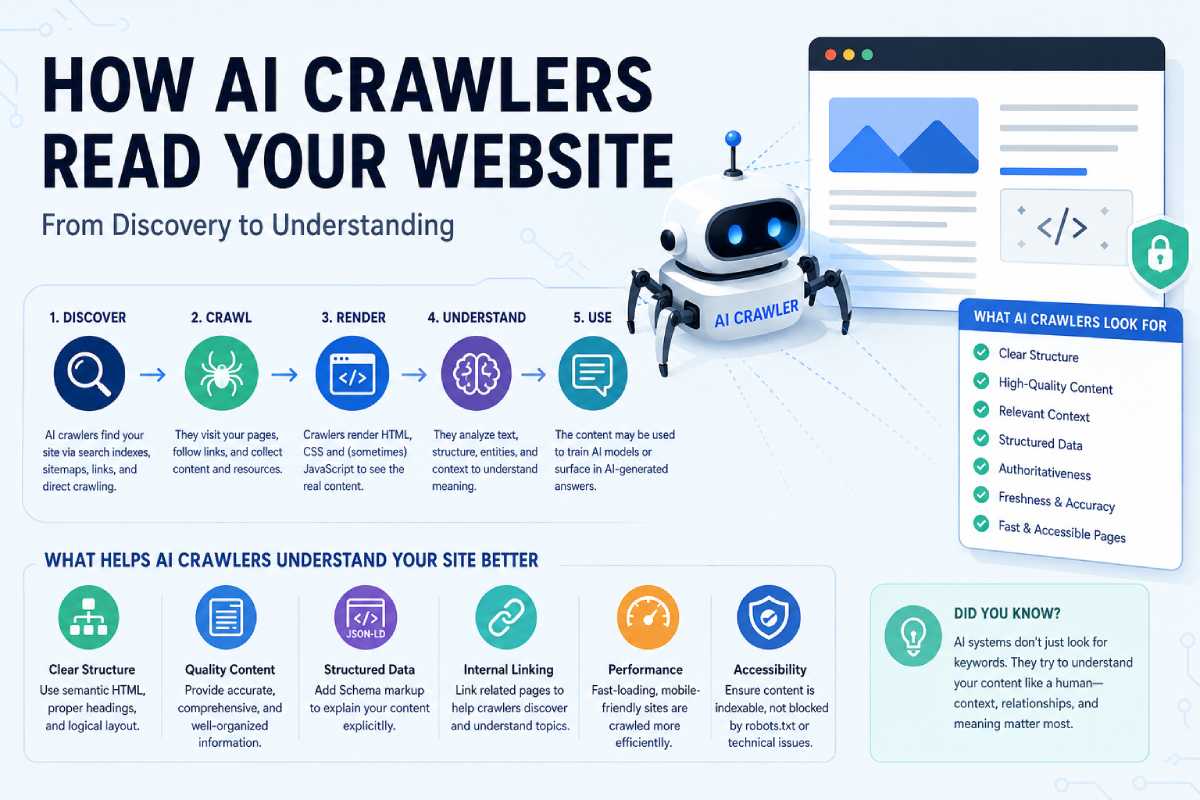
2. Implement Structured Data
Schema markup helps machines understand:
- Prices
- Availability
- Reviews
- Product details
3. Publish Comparison Content
Create resources that answer purchasing questions before customers ask them.
4. Invest in Expert Content
Experience-driven content is more likely to be trusted by both users and AI systems.
5. Optimize for Questions, Not Just Keywords
Customers increasingly search using natural language questions.
Examples:
- Which ecommerce platform is easiest to manage?
- What AI tools help increase ecommerce conversions?
- How can small businesses automate customer support?
Question-based content aligns closely with conversational discovery patterns.
What This Means for SEO Professionals
SEO is not disappearing. Instead, it is evolving. Traditional ranking factors remain important because AI systems still rely heavily on authoritative web content. However, optimization strategies are expanding beyond:
- Keywords
- Backlinks
- Rankings
Future success will depend on:
- Topical authority
- Structured content
- Expertise
- Data quality
- User trust
- Answer completeness
The Future of Ecommerce Discovery
The future customer journey may look very different:
- A customer explains their needs to an AI assistant.
- The AI researches available options.
- The AI narrows the choices.
- The customer reviews a small number of personalized recommendations.
- The purchase is completed with minimal friction.
The era of opening twenty browser tabs to compare products may gradually disappear. Businesses that prepare for conversational discovery today will be better positioned for tomorrow’s buying behaviors.
Final Thoughts
AI agents are changing product discovery from a search-first experience into a conversation-first experience. The winners in this new environment will not necessarily be the businesses with the most keywords or the largest advertising budgets. Instead, the winners will be the companies that provide:
- High-quality product data
- Expert guidance
- Clear answers
- Trustworthy information
- Exceptional customer experiences
The shift from SERPs to chat-based research is already underway. The question is no longer whether AI agents will influence ecommerce discovery. The question is whether your business is preparing for it.

Author of four Opencart book.
The recent are Opencart 4 developer book and Opencart 4 user manual