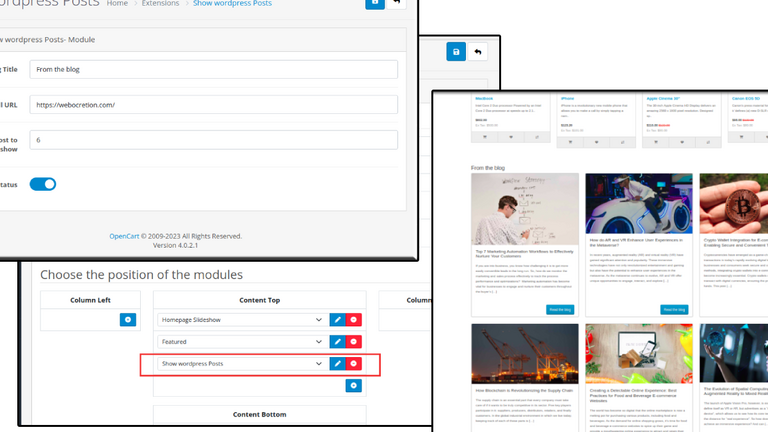
Another free Opencart 4 module by the Webocreation team to show WordPress blog posts in Opencart. In the WordPress blog posts show extension you will have the option to add a custom title, change the WordPress URL, add a number of blog posts, and module status. Download the module for free from the link below:
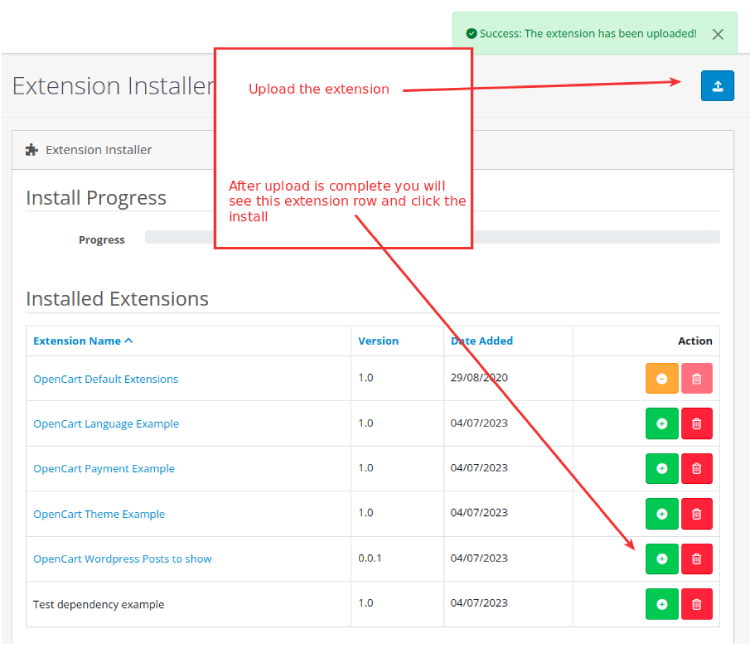
Once installed, you can go to Extensions >> Extensions >>Choose the extension type “Modules” and in the list of modules, you will see the new module called “Show WordPress Posts“, click the install button and the installation is complete.
Configuring the “Show WordPress Posts” module
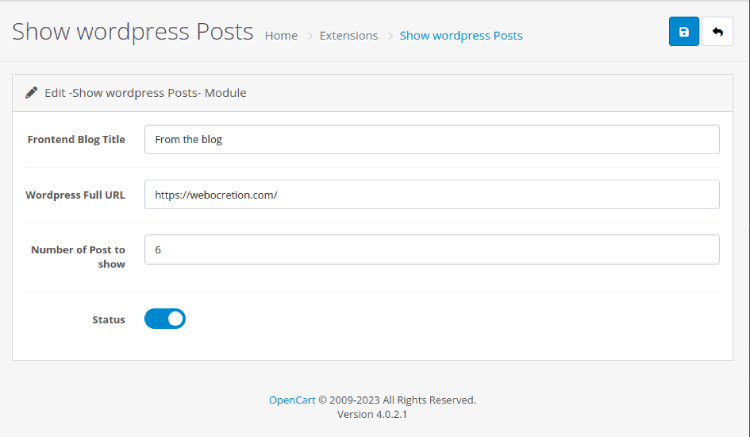
Go to Extensions >> Extensions >> Choose the extension type “Modules” and in the list of modules, go to “Show WordPress Posts” and then click Edit, and you will see the form below and start adding the details.
Frontend Blog Title: This is the title that will show at the top of the blog posts.
WordPress Full URL: This module uses the WordPress REST API endpoints to fetch the posts. You just need to enter the full URL of the WordPress blog. If the blog is installed in the sub-folder then you need to enter the full URL, like https://rempub.com/blog/ or similar.
Number of Posts to Show: This will pull the number of posts to show in the front end where the module is added to the layout.
Status: Enable the status.
In this way, you can configure this WordPress Opencart module.
Add WordPress Opencart module to Layout
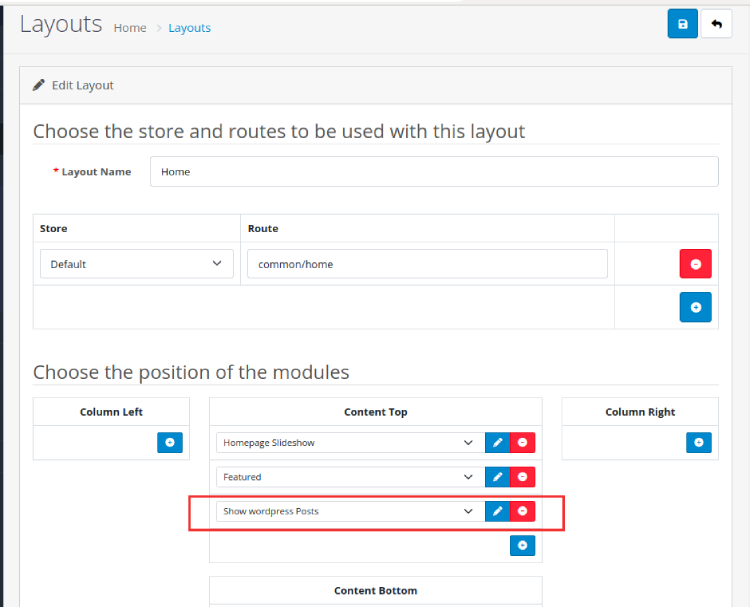
Once you install and configure the module, now you need to add to the layout to show at the front end. We are showing you to show on the home page, so we will add it to the home layout. To do that, go to admin >> Design >> Layout >> edit the Home and add the module and select “Show WordPress posts”. In the below screenshot, we added the module at the Content Top and Save.
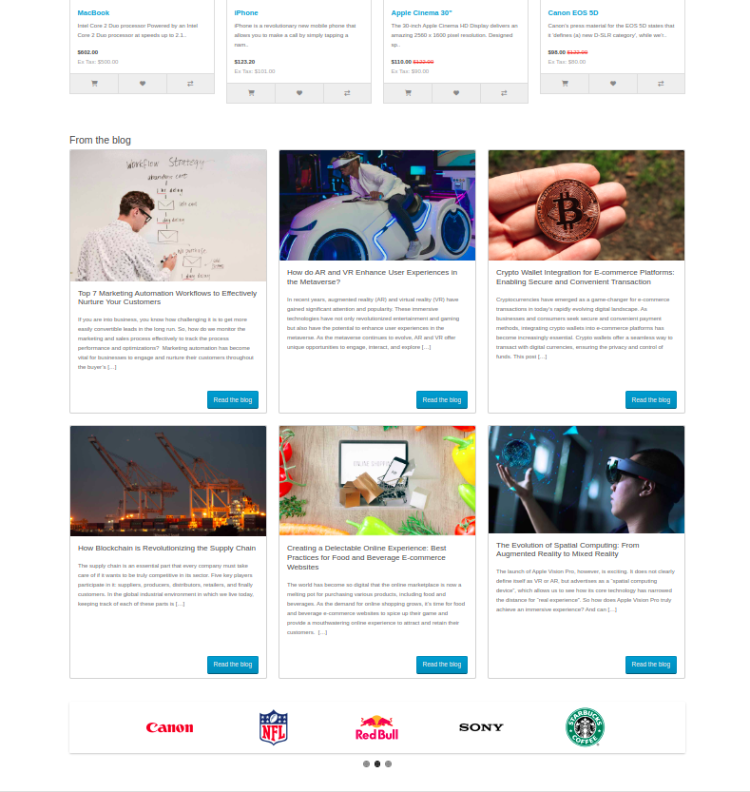
Frontend view of WordPress Opencart blog posts show
Here is how the WordPress blog posts are shown in the Opencart 4.
Conclusion
In this way, you can show WordPress blog posts in Opencart with this free Opencart module. Please let us know if you need any support or find any issues with this Opencart extension. Please subscribe to our YouTube Channel for Opencart video tutorials and get many other Opencart free modules. You can also find us on Twitter and Facebook.
The e-commerce industry has boomed within the last few years. Technological advancements and customer preferences make it easy to scale your e-commerce business quickly. As such, it’s important to find various ways and strategies that will help scale your business. This is where private equity comes into play.
Private equity provides an impact on your business’ growth strategies. They provide substantial capital to fuel your business’ growth and help guide your strategic decisions. With the right private equity firm, you can accelerate growth and maximize your returns.
In this article, we’ll talk about private equities and how they can help scale your e-commerce business.
What Is Private Equity?
Private equity is an investment involving the purchase and ownership of shares or ownership stakes in privately-held companies. These firms typically raise funds from institutional investors, such as:
Pension funds
Endowments
Wealthy individuals
Then, the firm uses these funds to acquire companies they think have high growth potential. They also target companies they believe have undervalued assets or opportunities for operational improvements. A private equity fund administration is often required to manage these investments so they can make smart decisions.
A private equity firm usually aims to gain substantial returns on their investments. Investments are typically long-term, with a typical holding period of several years.
Benefits of a Private Equity on an E-Commerce Business
Private equity investments provide various benefits to an e-commerce company. It’s a great way to jumpstart their business to achieve more successful operations.
Here are some of the top benefits of private equity in an e-commerce business:
Access to Capital
First and foremost, a private equity company provides an e-commerce business access to capital. You can use the money to fund growth initiatives and capital expenditures. This provides the business with a competitive edge over its competitors.
For example, you can use the money from a private equity fund to expand your product lines. These can help if you don’t have enough capital to release a new product. If successful, the product will bring in more money and success for your e-commerce business.
Strategic Guidance and Expertise
Private equity companies aren’t just there to bring in money. They also provide helpful guidance and expertise for your business. Many people in private equity companies are professionals with years of experience in the industry. This means you can rely on them to provide advice on how to grow your business.
These professionals usually have access to deep insights into the e-commerce sector, market trends, and consumer behavior. They work side-by-side with the company’s management team to optimize their investments. The advice from private investors usually includes knowing when to pivot and how to scale.
Operational Improvements
Another benefit of private equity companies is operational improvements. Before investing in an e-commerce company, a private equity firm will usually thoroughly analyze the company’s operations. They’ll look at which strategies are working and which ones aren’t. Afterward, they’ll decide whether they want to invest in your company.
If a private equity company decides to invest in your company, they’ll provide you with funds and other resources for operational improvements. Remember, these companies want to optimize their investments. This means they’ll do their best to help improve the company’s processes, systems, and operations.
Private equity companies usually have a team of well-versed experts in business operations. This team can help identify areas where the company needs to improve to maximize profits.
Network Industry and Connections
In the e-commerce industry, your network is very important. These people help increase your company’s visibility and open up different opportunities. Fortunately, private equity companies usually have a wide network of contacts in the industry.
These professionals also have access to potential investors, customers, and partners. They can help build relationships with these people that can benefit your business.
Private equity companies are also usually connected with other industry players, such as venture capitalists, debt providers, and merger and acquisition firms. As a result, you can access more resources and capital to help your business succeed.
Long-Term Perspective and Support
Lastly, private equity companies bring a long-term perspective to the table. This means they’re willing to invest in your company for the long haul. They’re there to support you for a long time, so you don’t have to worry about losing their support quickly.
Private equity companies are there to help you grow your business. They work with you on a long-term basis so that your company can reach its full potential. This helps create stability for the company and peace of mind for the management team and shareholders.
Conclusion
Private equity investments can help e-commerce businesses succeed in many ways. They provide capital and other benefits for e-commerce businesses that want to achieve growth in their industry.
We’ve talked about the various benefits that private equity companies provide above. All of these can help you achieve success in the e-commerce sector. So if you’re looking for an investment partner to help your business grow, consider working with a private equity company.
Cryptocurrencies have emerged as a game-changer for e-commerce transactions in today’s rapidly evolving digital landscape. As businesses and consumers seek secure and convenient payment methods, integrating crypto wallets into e-commerce platforms has become increasingly essential.
Crypto wallets offer a seamless way to transact with digital currencies, ensuring the privacy and control of funds.
This post explores the significance of crypto wallet integration in e-commerce, highlighting its role in enabling secure and convenient transactions for merchants and customers.
Understanding Crypto Wallets
Crypto wallets, also known as digital wallets or cryptocurrency wallets, are digital tools that enable users to store, manage, and transact with their cryptocurrencies. They are designed to securely store the private keys required to access and control the user’s digital assets on the blockchain.
Crypto wallets do not store the currencies themselves; instead, they store the keys that allow users to access their funds on the blockchain network.
Types of Crypto Wallets
There are several types of crypto wallets available, each with its characteristics and level of security:
Hardware Wallets: These wallets are physical devices (e.g., USB drives) that store private keys offline, providing enhanced security by isolating the keys from potential online threats.
Software Wallets: Software wallets are applications installed on computers or mobile devices. They can be further categorized into:
A. Desktop Wallets: Installed on a computer and accessible only from that device.
B. Mobile Wallets: Installed on smartphones or tablets, offering convenience and mobility.
Online Wallets: Also known as web wallets, these wallets operate on cloud servers and can be accessed through web browsers. While they provide ease of use and accessibility, they are considered less secure than hardware or software wallets.
Security: Crypto wallets employ encryption techniques to secure private keys, protecting funds from unauthorized access and potential hacks.
Privacy: Transactions with crypto wallets offer anonymity, as personal information is not directly tied to the transactions.
Fast and Borderless Transactions: Cryptocurrencies enable quick and frictionless transactions, especially for cross-border payments, bypassing traditional banking systems.
Lower Transaction Fees: Cryptocurrencies often have lower transaction fees than traditional payment methods, benefiting merchants and customers.
Empowering Financial Control: With crypto wallets, users have full control over their funds without relying on intermediaries, providing a sense of empowerment and ownership.
Integrating Crypto Wallets in E-commerce Platforms
Integrating crypto payments in business operations has emerged as a transformative trend in e-commerce. With the increasing popularity and adoption of cryptocurrencies, businesses recognize the value of incorporating crypto wallets into their e-commerce platforms.
Overview of Popular E-commerce Platforms Supporting Crypto Payments
As cryptocurrencies gain popularity, several prominent e-commerce platforms have started supporting crypto payments.
Some popular platforms include:
Shopify: Shopify has integrated with various crypto payment gateways, allowing merchants to accept cryptocurrencies such as Bitcoin, Ethereum, and Litecoin.
WooCommerce: This WordPress-based e-commerce platform offers plugins that enable seamless integration with crypto payment gateways, expanding payment options for merchants.
Magento: Magento, a widely used e-commerce platform, has also embraced cryptocurrencies by providing extensions and integrations for accepting digital currencies.
Steps to Integrate a Crypto Wallet into an E-commerce Platform
Select a compatible crypto payment gateway: Choose a reliable one that aligns with the e-commerce platform’s requirements and supports the desired cryptocurrencies.
Set up a crypto wallet: Create a wallet to securely store and manage the received digital currencies. Select a suitable wallet type based on security, ease of use, and compatibility with the chosen payment gateway.
Configure the payment gateway: Connect the chosen payment gateway to the e-commerce platform and configure the settings, including API integration, pricing, and supported currencies.
Implement the payment option: Customize the e-commerce platform’s checkout process to include the crypto payment option. This may involve modifying the user interface, adding payment buttons or widgets, and integrating with the selected payment gateway’s API.
Test and launch: Thoroughly test the integration to ensure seamless functionality and conduct end-to-end transactions. Once testing is successful, launch the crypto payment option for customers.
Technical Considerations and Security Measures
Crypto wallet integration into e-commerce platforms necessitates careful attention to technical considerations and security measures:
API integration: Ensure the e-commerce platform’s API supports the chosen crypto payment gateway and allows seamless communication between the platform and the wallet.
Wallet security: Implement strong security measures for the crypto wallet, including robust encryption, multi-factor authentication, and offline storage options like hardware wallets.
Transaction monitoring: Implement real-time transaction monitoring and fraud detection mechanisms to identify and mitigate suspicious activities or fraudulent transactions.
Compliance with regulations: Adhere to applicable legal and regulatory requirements, such as KYC (Know Your Customer) and AML (Anti-Money Laundering) regulations, to ensure compliance and protect against illicit activities.
Enhancing Security for Crypto Transactions
In the crypto world, secure transactions are of paramount importance due to the decentralized and irreversible nature of blockchain-based transactions. Here’s why secure transactions are crucial:
Protecting Digital Assets: Cryptocurrencies are digital assets with monetary value. Ensuring secure transactions safeguards users’ funds from unauthorized access, theft, or fraud.
Trust and Confidence: Secure transactions foster trust and confidence among users, encouraging the widespread adoption of cryptocurrencies. When users feel confident in the security of their transactions, they are more likely to engage in crypto-related activities.
Privacy and Anonymity: Cryptocurrencies provide a level of privacy and anonymity. Secure transactions protect users’ identities and transaction details, preserving their privacy in the digital realm.
Implementing Two-Factor Authentication and Encryption
Two-Factor Authentication (2FA): 2FA adds an extra layer of security by requiring users to provide two different verification forms. This could include something the user knows (e.g., a password) and something the user possesses (e.g., a verification code sent to their mobile device). Implementing 2FA for crypto wallets adds a barrier against unauthorized access.
Encryption: Encryption converts sensitive data into an unreadable format, which can only be decrypted with the correct encryption key. Encrypting data stored in crypto wallets and during transmission protects transactions from unauthorized interception and access.
Robust encryption algorithms ensure the confidentiality and integrity of the data involved in crypto transactions.
Benefits for Merchants and Customers
Crypto wallets offer numerous benefits for both merchants and customers:
Lower transaction fees and reduced chargebacks: Using crypto wallets can significantly decrease transaction costs for merchants and mitigate the risk of chargebacks, saving time and resources.
Global accessibility and elimination of currency conversion: With crypto wallets, businesses can accept payments from customers worldwide without needing currency conversions, facilitating seamless cross-border transactions.
Increased privacy and control over personal data: Crypto wallets provide users greater privacy and anonymity, reducing the risk of identity theft and data breaches. Merchants can conduct transactions without storing extensive customer data, simplifying compliance with data protection regulations.
Enhanced financial control: By utilizing crypto wallets, merchants and customers have direct ownership and control over their digital assets, eliminating the need for intermediaries and enabling greater financial autonomy.
Conclusion
Integrating crypto wallets into e-commerce platforms offers a compelling solution for secure and convenient transactions. By leveraging the benefits of crypto wallets, such as enhanced security, privacy, fast transactions, and lower fees, businesses can cater to the evolving needs of their customers in the digital age.
With the availability of popular e-commerce platforms supporting crypto payments and the clear steps for integration, businesses can tap into the growing crypto market and empower their customers with greater financial control.
The world has become so digital that the online marketplace is now a melting pot for purchasing various products, including food and beverages. As the demand for online shopping grows, it’s time for food and beverage e-commerce websites to spice up their game and provide a mouthwatering online experience to attract and retain their customers.
In this article, we will serve you a delightful feast of actionable tips so that you can create a finger-licking good platform for your food and beverage e-commerce business.
Let’s dig in and savor these delectable suggestions!
User-Friendly Website Design: Recipe For Success
A visually appealing and intuitive website design is the foundation of a great online experience. Users should find it easy to navigate through the website, locate products, and place orders. Implementing clear and concise menus, search bars, and categorization can significantly enhance the user experience.
Captivating product images are like a visual buffet—they play a vital role in attracting customers. High-resolution photographs that showcase the food and beverages in their best light will entice your visitors to explore the offerings further. You can even include multiple angles, zoom features, and even videos to provide a more immersive experience.
Accurate and detailed product descriptions are essential to providing customers with all the necessary information they need. So describe the ingredients, flavors, portion sizes, and any special dietary considerations of your products. Remember, transparency is key to building trust with online shoppers!
Streamlined Navigation: Smooth Sailing through Food Galore
Simple and intuitive navigation is critical to guiding users effortlessly through the website. A logical and well-structured menu system, along with breadcrumbs, can help users easily backtrack or navigate to their desired pages. Make sure to always avoid overwhelming customers with too many options on a single page.
Implementing Food Safety Measures: Safe and Savory
Food safety is of paramount importance when it comes to e-commerce websites selling perishable items. So make sure you’re adhering to strict food safety regulations and certifications! To build trust with your customers, you can communicate your commitment to quality and provide information on the handling, storage, and shipping of food products through a dedicated page or a blog post.
Seamless Checkout Process: From Cart to Plate in No Time
The checkout process should be seamless and hassle-free to reduce cart abandonment rates. Implementing a single-page checkout or a progress indicator can make the process feel quick and easy. Don’t forget to provide clear instructions, visible pricing, and various payment options to accommodate different preferences.
Personalized Recommendations: Customized Cravings
Enhance the customer experience by offering personalized product recommendations based on their browsing and purchasing history. Utilize machine learning algorithms and customer preferences to suggest complementary food and beverage items, increasing the chances of upselling.
Customer Reviews and Ratings: Serving Up Customer Satisfaction
Displaying customer reviews and ratings can help build your brand’s credibility. Encourage customers to leave reviews after their purchase. Respond to both positive and negative feedback promptly to show your dedication to customer satisfaction.
Mobile Optimization: On-the-Go Gastronomic Delights
With the rising popularity of smartphones, optimizing your website for mobile devices is crucial. Ensure that your website is responsive and provides an excellent user experience across various screen sizes. Mobile-friendly interfaces and quick loading times are essential to keeping users engaged.
Secure Payment Options: Securing the Flavorful Transaction
Online shoppers prioritize the security of their personal and financial information. Implement robust security measures and offer trusted payment gateways to protect customer data. Display trust badges and SSL certificates to reassure customers that their transactions are secure.
Social Media Integration: Socializing the Foodie Experience
Leverage the power of social media by integrating sharing buttons and links into your profiles. Encourage customers to share their purchases and experiences on platforms like Facebook, Instagram, and Twitter. This helps generate buzz, reach new customers, and build brand awareness.
Efficient Customer Support: Serving with a Smile
Responsive and reliable customer support is essential for a delightful online experience. Provide customers with multiple ways to contact you, such as live chat, email, and phone support. Promptly address inquiries, concerns, and complaints to ensure customer satisfaction.
Content Marketing: Sharing Foodie Inspiration
If you want to promote your food and beverage e-commerce website, you’ve got to have a content marketing strategy. By creating engaging and informative content, you can attract and retain customers while establishing yourself as an industry expert.
Share delectable recipes, cooking tips, and articles on food-related topics. You can even reflect your company’s values by emphasizing your sustainability initiatives, like using styrofoam alternatives for eco-friendly packaging solutions, to resonate with today’s environmentally conscious consumers.
Discounts and Promos: Irresistible Special Offers
Everyone loves a good deal, so spice things up by offering special discounts and promotions. Whether it’s a “Flavorful Friday” sale or a “Tasty Tuesday” promotion, providing exclusive offers and limited-time deals can entice customers to make a purchase. Promote these offers through your website, social media channels, and email newsletters to create a sense of urgency and excitement.
A Tasty Conclusion
Creating a delectable online experience for your food and beverage e-commerce website requires a thoughtful blend of user-friendly design, high-quality visuals, personalized recommendations, and secure transactions. By following these tips and best practices, you can create a virtual feast that leaves customers hungry for more.
Remember, in the online foodie world, the secret ingredient is always a delightful user experience! For more insightful articles like this, check out Webocreation’s Blog!
In product development, there’s always a balancing act between user experience (UX) design and managing potential risks.
UX designers often focus on crafting an engaging, intuitive, and seamless user journey, maximizing functionality and enjoyment. On the flip side, risk management professionals are security gatekeepers, working diligently to guard against cyber threats and protect precious data.
User Experience Design, often abbreviated as UX design, zeroes in on the user’s comprehensive interaction with a product or service. Beyond just aesthetics, it’s about doinga thorough UX audit and crafting an interface that’s user-friendly and seamless.
Here are some fundamental principles that guide effective UX design:
User-Centric Approach: The cornerstone of UX design is prioritizing the user. It’s all about grasping what the users need, desire, and their constraints, often through tools like user research and usability tests. Every choice should center around the user’s perspective.
Simplicity: A well-designed product should be simple and easy to navigate. Avoid unnecessary complexity, and ensure every element serves a purpose. Remember: less is often more when it comes to UX design.
Consistency: Consistency in design helps users feel familiar with your product. This can include consistent colors, fonts, and layout across different pages or sections.
Feedback & Interaction: Users should receive immediate feedback after acting. This can be as simple as a button changing color when clicked or a message appearing after a form submission. This interaction helps users understand if their action was successful or not.
Accessibility: A crucial principle of UX design is ensuring your product is accessible to as many people as possible. This includes considering users with disabilities and designing your product in a way everyone can use.
Error Prevention & Recovery: A good UX design should anticipate and prevent potential errors before they happen. However, if an error does occur, provide clear instructions to the user on how to recover and proceed.
Scalability: The design should be flexible to accommodate changes or additions in the future. It should also perform consistently across different devices and screen sizes.
Key Elements of Risk Management
Risk management is pivotal in any organization, helping identify, assess, and control threats to the company’s capital and earnings. These threats or risks could stem from various sources, including financial uncertainty, legal liabilities, strategic management errors, accidents, or natural disasters.
Here are three key elements that form the backbone of effective risk management:
Risk Identification
The first step in risk management involves identifying potential risks that could negatively impact an organization’s operations or projects. This process includes recognizing the risk sources, areas of impact, events, and their causes and potential consequences. Methods for identifying risks can range from data analysis and field inspections to brainstorming sessions and expert opinions.
Risk Assessment
Once risks have been identified, they must be assessed for their potential severity. This is usually done by analyzing the likelihood of each risk event occurring and the magnitude of its potential impact. Risk assessment tools include risk matrices, scenario analysis, or advanced statistical techniques. The output of this stage is a prioritized list of risks based on their potential effect on the organization.
Risk Mitigation
The final key element of risk management is risk mitigation or risk treatment. This involves developing strategies to reduce the potential damage of identified risks. Strategies can include transferring the risk to another party (like insurance), avoiding the risk, reducing the negative effect of the risk, or accepting some or all of the consequences of a particular risk.
The Synergy of UX Design and Risk Management
On the surface, UX design and risk management might appear worlds apart. Yet, when you dig a bit deeper, you’ll find both aim to ensure a smooth, effective, and secure user journey. This is where product strategy consulting can help.
Below are some examples of how the collaboration between UX design and risk management paves the way for stronger, more user-centric systems:
Shared Focus on User Experience
At their core, both UX design and risk management center around the user’s journey. UX designers make a product intuitive and engaging, basing their strategies on user needs, actions, and feedback. Conversely, risk managers aim to guarantee that users complete tasks without stumbling upon potential hazards, ensuring a consistent user experience.
By collaborating, UX designers and risk managers can forge a setting that balances user-centric and steadfast. Applying design ops principles works towards shaping a product or system that lessens the chances of user mistakes, system glitches, or security threats.
Predictive Analysis
Both UX design and risk management hinge on forward-thinking analysis. UX designers employ this approach to analyze user interactions with a product, anticipating challenges and finding solutions. Similarly, risk managers use similar analyses to identify possible threats, measure their consequences, and devise plans to counteract them.
This mutual emphasis on forward-thinking can nurture a partnership between the two fields, resulting in a deeper awareness of potential challenges and user reactions. Organizations can preemptively tackle potential issues by weaving UX design perspectives with risk management approaches before they escalate.
Mitigation Strategies
Finally, both UX design and risk management involve developing mitigation strategies. For UX designers, this might mean designing an interface to prevent user errors or confusion. For risk managers, it could involve creating a plan to handle potential security threats or system failures.
The overlapping goals between UX design and risk management offer collaboration opportunities to amplify user experience. With the right mitigation plans, they can guarantee a system that addresses user needs while shielding them from potential hazards.
Take a Well-Balanced Approach to UX Design and Risk Management
Though UX design and risk management might approach from varied perspectives, they both aim for a shared outcome – developing a product that caters to users both efficiently and safely. By tapping into this combined strength, organizations can roll out systems that engage users while ensuring security and reliability.
The launch of Apple Vision Pro, however, is exciting. It does not clearly define itself as VR or AR, but advertises as a “spatial computing device”, which allows us to see how its core technology has narrowed the distance for “real experience”. So how does Apple Vision Pro truly achieve an immersive experience? And can all our senses be convinced that the experience it presents is real?
How augmented reality is Transforming the spatial computing landscape
Thanks to developments in augmented reality (AR), the landscape of spatial computing is changing. A layer of virtual information that may be interacted with can be added to the real environment using the technology known as augmented reality (AR). The way we interact with the things in our surroundings and with one another might be completely transformed by this technology.
There are already several sectors where AR is being used in spatial computing. For instance, interactive infotainment systems that give drivers up-to-the-minute information about their surroundings are being created using it in the car sector. Additionally, virtual product displays and interactive training on how to utilize them are being employed in the retail industry to improve the consumer experience.
In the world of architecture, AR is also making a difference. Using augmented reality (AR), architects can see and interact with their ideas before they are produced, making it simple and quick for them to make adjustments and obtain feedback. The price and duration of conventional architectural procedures may be lowered as a result.
In the entertainment sector, AR is also being utilized to create immersive experiences. AR features are now being added to games and movies, enabling spectators to interact with virtual people and objects that seem to be a part of the real environment.
The precision of location-based services like navigation and mapping is also being improved with the use of augmented reality. These services can give consumers more precise and helpful data by superimposing digital information on the real environment.
In general, augmented reality is changing the field of spatial computing and improving how individuals interact with their surroundings. The way we see and engage with our world will likely continue to change as technology develops.
The Potential of Mixed Reality and the Future of spatial computing
The way people engage with technology is changing as quickly as the rest of the world. While mixed reality (MR) has just been studied, virtual and augmented reality (VR and AR) have been available for a while. Users may interact with digital items as if they were real because to the way MR mixes elements of VR and AR.
Already, MR has been used in a number of industries, including healthcare, education, and gaming. Prior to using these treatments on actual patients, medical practitioners can better grasp the anatomical and practical aspects of the operations by simulating them using MRI in the healthcare industry. Students may explore virtual worlds and get a greater grasp of a variety of subjects thanks to the usage of MR in educational settings. With the help of MR, game designers can now produce engaging interactive experiences that connect the actual and digital worlds.
The potential of MR, however, goes well beyond these application scenarios. Spatial computing, which aims to merge physical aspects with digital ones to produce a more natural and intuitive user experience, has received greater attention in recent years. To develop immersive and interactive worlds, spatial computing blends the strength of MR with the Internet of Things (IoT). Users may, for instance, engage with digital things in a real-world setting, like a living room, and have those objects react to their activities.
The potential for MRI with spatial computing is quite promising. The potential for MR to revolutionize how we interact with technology and our surroundings is enormous as technology continues to advance and become more interwoven into our lives. As technology advances, we may be able to develop novel experiences and uses that were previously unimaginable. The potential of MR and spatial computing has only just begun to be explored, and in the years to come, it is probable that this potential will only grow.
How the Evolution of Spatial Computing is Being Shaped by the Internet of Things
Our interactions with the physical environment are changing as a result of the Internet of Things (IoT). IoT technology has advanced and spread significantly in recent years. As it develops, it is playing a crucial part in the advancement of spatial computing, a cutting-edge technology that has the potential to completely change how we interact with our surroundings.
The area of spatial computing, which is still in its infancy, integrates tangible items in the environment with virtual and augmented reality. It enables us to engage with our surroundings in a way that seems more intuitive and natural. Spatial computing can close the gap between the digital and physical worlds by utilizing IoT, enabling more seamless and natural interactions with our surroundings.
Virtual and augmented reality is where spatial computing is most prominently used. Users can have a more immersive and participatory experience with the surroundings by wearing headphones. Users may engage with the environment more naturally by implementing IoT technologies. For instance, when a user enters a room, sensors built into the walls may recognize the space and show the user information about it via their headphones. Without having to do a manual search for information, this enables the user to engage with their surroundings in a more natural way.
Advanced spatial computing applications are also powered by IoT technologies. Robotic systems with IoT capabilities, for instance, can be utilized to automate environmental duties. Robots may be designed to move and interact with the environment in a number of ways by utilizing sensors and actuators. This creates a wide range of opportunities, including automated manufacturing facilities, self-driving automobiles, and home automation systems.
IoT technology will continue to influence the growth of spatial computing as it develops. Spatial computing will become more potent and logical as a result of using IoT, enabling people to engage with their surroundings in a more organic and immersive manner. This technology will profoundly affect how we interact with the physical world and is certain to have a long-term effect on computers.
Spatial Computing
Spatial computing has witnessed remarkable advancements in recent years, revolutionizing the way we interact with digital content and the physical world. This article explores the journey of spatial computing, tracing its evolution from augmented reality (AR) to mixed reality (MR). Let’s dive into this fascinating realm of technological progress.
I. Augmented Reality (AR): Bridging the Digital and Physical Worlds
Definition and Basics:
Introducing Augmented Reality (AR)
Understanding the concept of overlaying digital information onto the real world
Key components: sensors, cameras, and display devices
Early Applications and Limitations:
Early pioneers and AR experiments
Entertainment and gaming applications
Challenges faced: limited hardware capabilities, low processing power
Expansion into Various Industries:
AR in retail: enhancing customer experiences, virtual try-ons, and personalized shopping
AR in education: immersive learning, visualizing complex concepts
AR in healthcare: surgical training, patient visualization, and remote consultations
II. Mixed Reality (MR): The Seamless Blend of Real and Virtual Worlds
Definition and Differentiation:
Defining Mixed Reality (MR)
Understanding the spectrum of reality technologies (AR, VR, and MR)
The significance of real-time interaction between digital and physical elements
Advancements in Hardware:
Introduction of MR headsets, such as Microsoft HoloLens and Magic Leap
Inside-out tracking and spatial mapping for precise interactions
Improved field of view and resolution for a more immersive experience
Transformation across Industries:
Manufacturing and design: 3D modeling, virtual prototyping, and assembly guidance
Architecture and construction: visualizing building plans, collaborative design reviews
Training and simulation: realistic scenarios, skill development, and hazardous environment training
Understanding SLAM and its role in spatial computing
Real-time mapping of the physical environment and positioning of virtual objects
Artificial Intelligence and Machine Learning:
Enhancing spatial computing with AI and ML algorithms
Object recognition, scene understanding, and intelligent interaction
IV. Future Directions and Possibilities:
Wearable Devices and Everyday Integration:
Miniaturization of hardware for mainstream adoption
Smart glasses and contact lenses as future MR interfaces
5G and Edge Computing:
Enabling low latency and high-bandwidth connections for seamless MR experiences
Cloud-based processing for complex computations and content delivery
Social and Collaborative MR Experiences:
Shared virtual spaces and multi-user interactions
Remote collaboration and communication in a mixed reality environment
Conclusion:
Spatial computing has come a long way, evolving from augmented reality to mixed reality. The integration of digital content with the physical world has opened up endless possibilities across industries and transformed how we interact with technology. As advancements continue and technologies mature, spatial computing is poised to reshape our everyday lives and pave the way for a more immersive and interconnected future.
Today we are writing about the 5 best practices for UI designers, explaining the research, patterns, consistency, behavior, content, etc. that we need to take into consideration while designing for mobile.
What exactly is design consistency?
Consistency in design means connecting UI elements with identifiable and predictable actions. This is the key to a great product experience and is important for UX designers. To put it simply, you can think of it as a convention (“If you see a light gray button in a popup, expect it to cancel and close the popup”) to make it easier for users to interact with the product.
Once a user becomes a regular user, they begin to trust the product even more, which is the result of consistent design. Here are five best practices we use in our daily design to provide a consistent UI for our users.
1. Research on UI/UX design focusing on users
Nothing is more important than quality research for a consistent experience.
Don’t underestimate this or rush into it. Time and budget are always necessary considerations in product design. If either is missing, the product will not be shipped. While these are important in the process, it is important not to lose sight of the people who will use the product. In the early stages of product planning, be sure to conduct research with the user in mind.
Define user goals
Put yourself in the shoes of a new user. What do they want to achieve? How will the application help them? List your goals and refer to them throughout theUI/UX design services process.
For example, let’s say you’re building a travel app. This travel app allows users to select the duration of their vacation and find great flight and hotel deals within their budget. But this isn’t your standard travel site. It connects to your Facebook account and does its magic by planning the top 5 vacations based on the content you’ve shared. All users have to do is select the vacation plan they like the most and the rest is complete.
Here are some of the user’s goals:
View vacation options within a specified period
Compare vacation options
Vacation selection based on user interests
Stick to your vacation budget
Now that you know the breakdown of your goals, let’s design it to meet your users’ expectations.
Familiarize yourself with common UI patterns
Don’t reinvent the wheel when it comes to established UI patterns. Repeating patterns solve common UX and UI design problems.
Of course, UX designers shouldn’t “copy” all the layouts of similar applications. Patterns should be filtered and modified depending on the user’s goals.
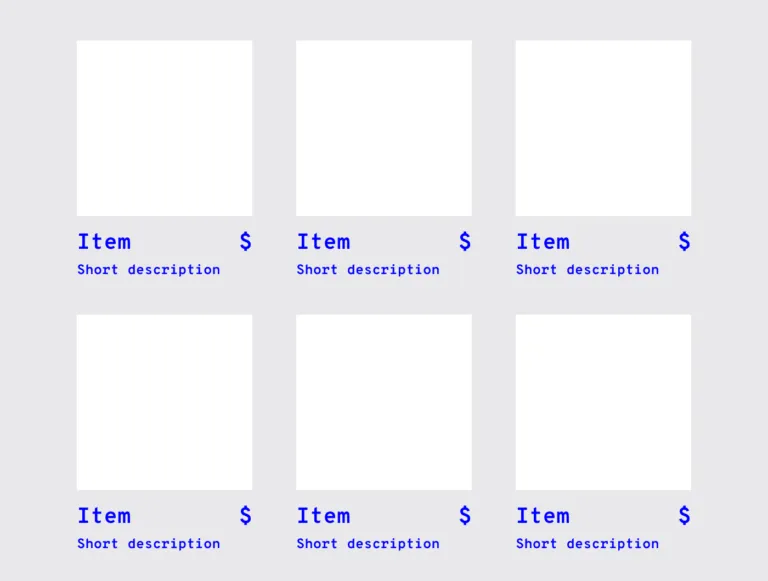
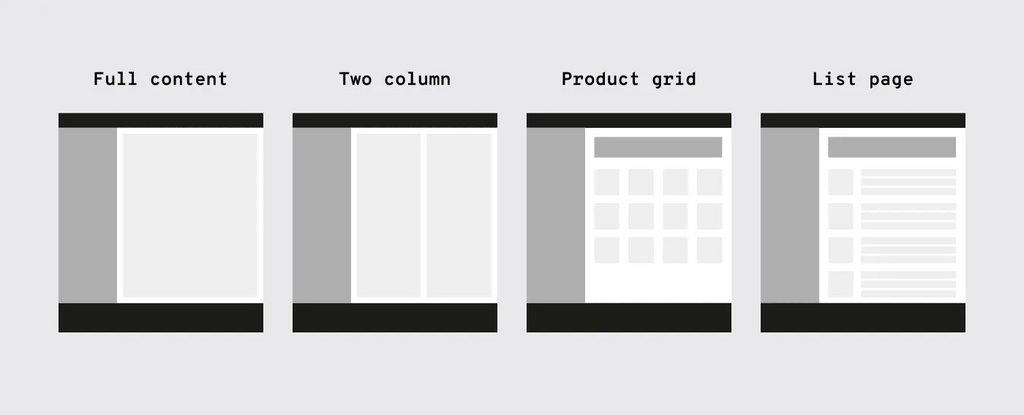
A typical pattern in e-commerce is the product grid. This pattern allows users to easily view product information.
It’s fair to say that patterns are evolving and users are aware of standard positions for elements. Many users will agree that when you want to search, it’s common to place the search bar at the top center or to the right.
2. Establish design patterns for product UI/UX design consistency
One of the keys to a successful and consistent UI is for users to perform tasks with minimal action. If a task that requires four steps can easily be completed in two, the UI should always change to accommodate short task flows. UI patterns can help with this. After all, this efficiency is why it became a pattern in the first place.
Design hierarchy
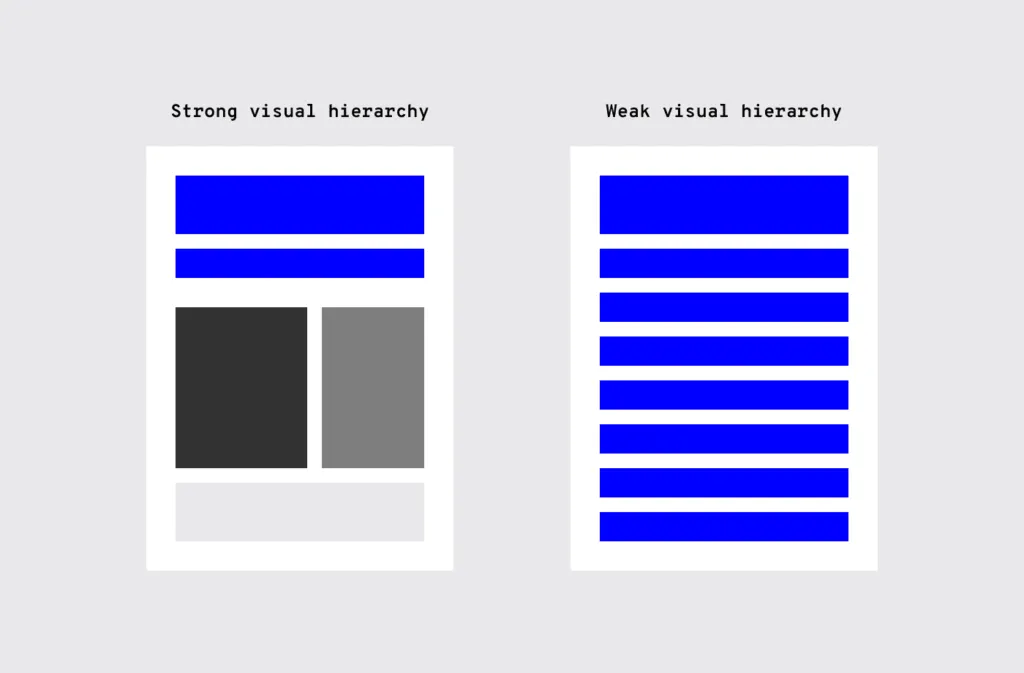
Along with design patterns, having a design hierarchy established is great for UI consistency. Users instinctively pay attention to the order and priority of the elements they interact with, whether they realize it or not.
When it comes to visuals and the human eye, certain factors are prioritized over others (large size, bright colors, etc.) and how “visible” they are. Think of screen visuals as the first thing people see, the second thing they see, and the third thing they see. This allows UX designers to not only help users find primary features faster but also present secondary and tertiary features with appropriate attention.
UI and UX design elements
An application’s UI has many design elements, each of which constitutes a building block that forms a UI pattern. Having an organized inventory and checking that elements are used properly helps maintain a consistent experience.
Branding elements
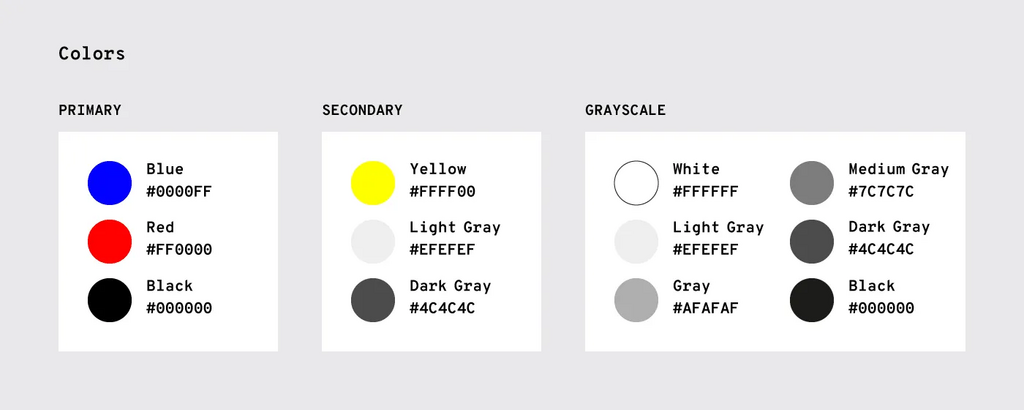
Create consistency across your brand. Typography, logos, correct image styles, brand color schemes, etc. should be reflected in your application, just like any other brand property.
Is the correct logo being used? Are the branding colors unified? Does the typeface match the others? Maintaining brand consistency ensures that new projects feel like part of the brand family, rather than a black sheep. The style guide has all the information you need.
Typography
The elements that have the most visual impact, like typography, should always be ‘on-brand’.
This visual element is especially important not only for the hierarchy but also for the overall UX. By changing text size, font, and placement, you can improve scannability, legibility, legibility, and even navigation.
Component
When doing user research, you need to be familiar with UI patterns and their components. Knowing how each component behaves in and out of patterns allows UI/UX development companiesto properly prioritize all elements on the screen and ensure they don’t miss anything.
“Components” are the various elements that make up a pattern, such as
button
card
form
list
panel
progress bar
For example, let’s say you’re considering adding pagination so users don’t have to scroll through long lists.
As you look at the wireframe, you notice that one list has pagination for 20 or more items, while another part of the application only has pagination for 40 or more items. Which is correct? This example shows that clearly determining guidelines is the backbone of consistency in UI/UX design.
Template
If you’re having trouble standardizing your site or app, try using templates.
Templates can be used in most applications, allowing the layout and elements to look the same, and streamlining UI functionality across the product. Additionally, you can use the same UI template over and over again (even years later).
Pattern library and design system
It may not be visible to users, but it’s one of the keys to consistency. Many teams today have a pattern library or design system as a reference point to keep everyone on the same page. A pattern library or design system is a rulebook that everyone on your team can reference at any time. This is essential for maintaining consistency across the team.
Pattern libraries may not be as robust as design systems because they are specialized in design patterns. The design system has more information, including useful documentation on all UI patterns and various components. Pattern libraries are also a subsection of the design system.
3. Consistent behavior in your application
The ease of use of the application is undisputed. It helps users achieve their goals by saving time, avoiding headaches, and eliminating confusion. These are all requirements for customer satisfaction.
Consistent actions eliminate the need for user discovery, making task flow smoother for users. If a user knows how to use a feature in one section, they know how to use it in all sections (as long as it’s consistent).
When users explore new parts of an application, they essentially transfer past knowledge to a new context. Consistent behavior will become second nature, and eventually, users will be able to use your application without thinking. Additionally, users can minimize the learning curve by bringing these expectations to new features and aspects of the product that they have not yet used.
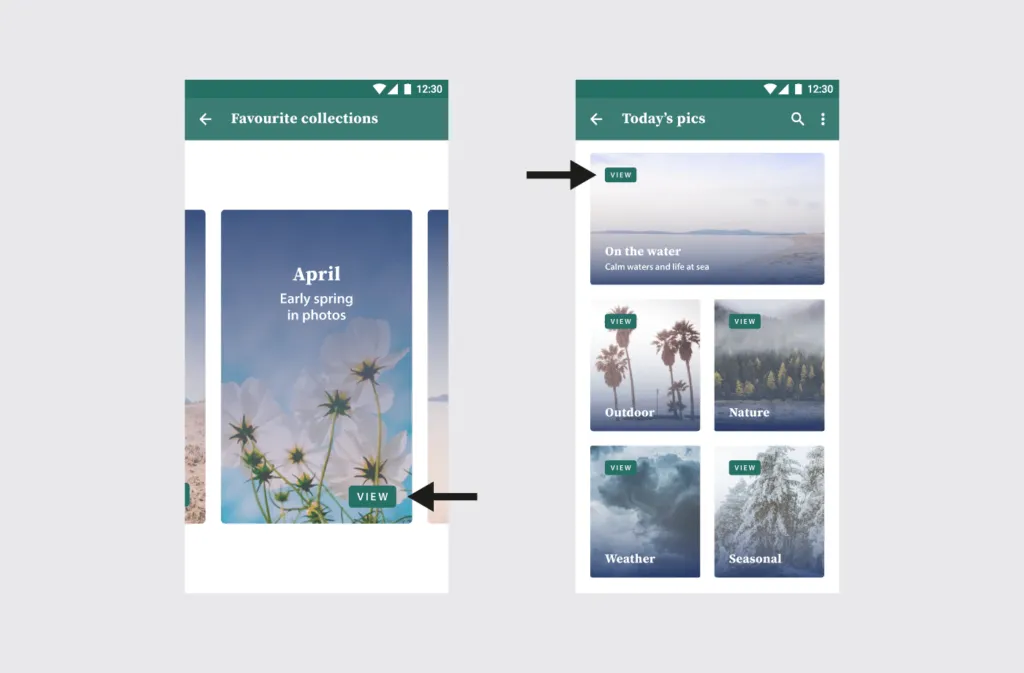
The placement of “Display” is not consistent. On most cards, it’s at the top, but on collection cards, it’s at the bottom. Such inconsistent placement can cause users to pause momentarily to look for the “Show” option, not to mention undermine their own natural habit-forming process.
So, what specific points should we consider when designing an interface? Throughout the process, ask yourself questions like:
Do all parts of the application behave the same way?
How do interactions work? Are they predictable and consistent?
How much discovery is required for the user to understand this interaction?
In the example on the left, the sorting is inconsistent. Not all columns have sorting options. Users may want to sort data on other columns. In the example to the right, all columns are sorted consistently.
4. Product content
Not only the visual elements are important, but also the text throughout the application.
Consistent copy throughout the application, especially consistent terminology, is also important. Using two different words to describe the same feature can make it appear as if they are two different features, causing the workflow to pause momentarily as users try to resolve the discrepancy.
Consistent copying can avoid such confusion.
Content structure
Content plays an important role in UI/UX design service elements, from something as simple as a navigation list to something as complex as product documentation. It’s not just the text, but how the copy text is expressed visually, such as body copy, list items, table content, etc. that is important.
Be especially careful when handling content in these areas.
Navigation
dropdown
form field
validation message
Tooltip
Chart
image caption
Error message
Loading screen
Confirmation page
Product support documentation
Unified content branding
Sometimes you may feel that a certain part of the application doesn’t feel right. This is often due to inconsistency in the language of the content. For example, one button may say “Logout” while another button says “Sign out”.
Even inconsistencies that are not noticeable can cause a feeling of discomfort.
For fans of the Oxford comma, even “trivial” things like how to use a comma unconsciously become a concern. When these unconscious flags are raised enough times, the user’s conscious brain begins to notice.
Other writing guidelines such as title case and voice/tone also impact the user experience. The typography of the title is more experiential, but the voice and tone are a little more challenging. The problem is exacerbated when most of your content is casual in style, which clashes with your more formal “brand language.”
Default settings for appropriate users
By considering your users’ goals up front, you can set realistic defaults and reduce the burden on your users.
If the default settings are the most popular settings, users may not need to adjust them at all. For example, date selection screens on airline and car rental sites often default to dates in the near future based on past statistics.
You should also pay attention to your form. This is because default settings can reduce user effort.
5. Consistent communication
All user interactions, such as search results, form submission messages, and error windows, are communications. For your app to be successful, you need to speak to your users and keep them informed about what’s going on. And like everything else, the method of communication must be consistent.
Status changes and useful information
Users appreciate feedback, such as a toggle that changes color to indicate “on” or “off,” or a sound effect to confirm an action is complete.
Users should not spend time checking whether an action has taken place. This is common with form submissions, and it happens in other areas as well. In these situations, it is necessary to display a quick success (or error) message.
In recent years, augmented reality (AR) and virtual reality (VR) have gained significant attention and popularity. These immersive technologies have not only revolutionized entertainment and gaming but also have the potential to enhance user experiences in the metaverse. As the metaverse continues to evolve, AR and VR offer unique opportunities to engage, interact, and explore this digital universe in unprecedented ways. If you’re looking to harness the power of AR and VR in the metaverse, partnering with a leading VR app development company can be the key to bringing your vision to life. This article will explore how AR and VR enrich user experiences within the metaverse.
Introduction to the Metaverse
The metaverse is a virtual universe where users can interact with each other and digital content in a three-dimensional space. It encompasses various virtual worlds, augmented realities, and online communities. It is a collective virtual shared space that offers ongoing communication, collaboration, and exploration possibilities.
Understanding Augmented Reality (AR)
AR is a technology that overlays digital information and virtual objects onto the real world, enhancing the user’s perception and interaction with their surroundings. Using smartphones or smart glasses, users can experience a blended reality that seamlessly integrates the physical and digital worlds.
The Power of Virtual Reality (VR)
Conversely, VR immerses users in a completely virtual environment, shutting out the physical world and transporting them to a simulated reality. Through headsets, users can experience a sense of presence and interact with a highly immersive and interactive virtual world.
Integration of AR and VR in the Metaverse
Integrating AR and VR technologies brings a new level of engagement and immersion in the metaverse. Let’s explore how AR and VR enhance user experiences within this digital universe.
Enhanced Visual Experiences
AR and VR technologies enable users to perceive and interact with digital content in a visually stunning and realistic manner. In the metaverse, users can explore virtual landscapes, visit breathtaking cities, and interact with real virtual objects. The immersive nature of AR and VR enhances the visual appeal and captivates users, making their experiences more vivid and memorable.
Immersive Interactions
AR and VR provide users with the ability to interact with the metaverse and its inhabitants in ways that were previously unimaginable. Users can engage in virtual social interactions, collaborate, and attend virtual events and conferences. The sense of presence created by these technologies fosters a deeper connection and engagement, making interactions within the metaverse feel more authentic and meaningful.
Personalized Avatars and Environments
AR and VR allow users to customize their avatars and create personalized virtual environments within the metaverse. Users can express their individuality and uniqueness by designing their virtual appearances and surroundings. This personalization adds a layer of self-expression and creativity to the user experience, enabling users to shape their digital identities and spaces.
Empowering Collaborative Experiences
Collaboration is a key aspect of the metaverse, and AR and VR technologies facilitate seamless and immersive collaboration between users. Virtual meetings, brainstorming sessions, and creative collaborations become more engaging and productive as participants can interact with each other and share ideas in a shared virtual space. Collaborating across distances and time zones opens up new possibilities for remote work, learning, and socializing.
Real-World Simulations and Training
AR and VR technologies provide realistic simulations that can be used for training and educational purposes within the metaverse. From flight simulations to medical procedures, users can engage in lifelike scenarios that offer hands-on learning experiences. These simulations enhance knowledge acquisition and provide a safe and controlled environment for users to practice and develop their skills.
Overcoming Limitations
While AR and VR offer tremendous potential, some limitations remain. Technical challenges such as hardware requirements, motion sickness, and user accessibility must be tackled to ensure a seamless and inclusive user experience. Ethical considerations regarding privacy, data security, and the potential for addiction should also be considered.
Also Read: How Virtual Reality App Development is Reshaping Industries
Impact on Industrieshttps://truxgo.net/blogs/453616/1599271/how-virtual-reality-app-development-is-reshaping-industries
AR and VR technologies are poised to revolutionize various industries within the metaverse. From entertainment and gaming to healthcare, education, and retail, these technologies have the potential to transform how businesses operate and engage with their customers. Virtual shopping experiences, immersive storytelling, and virtual training programs are just a few examples of the applications of AR and VR in different sectors.
Challenges and Considerations
Addressing the challenges and considerations associated with AR and VR is essential as the metaverse evolves. Privacy concerns, ethical use of data, user safety, and the digital divide are among the important factors that must be carefully managed and regulated. Collaboration between technology developers, policymakers, and users will be crucial in shaping a responsible and inclusive metaverse.
Future Possibilities
The future of the metaverse holds limitless possibilities for integrating AR and VR technologies. Hardware, software, and network infrastructure advancements will lead to even more immersive and seamless experiences. The metaverse will continue to expand, blurring the boundaries between the physical and digital worlds and offering new opportunities for communication, creativity, and exploration.
Conclusion
AR and VR technologies have emerged as powerful tools for enhancing user experiences in the metaverse. Through enhanced visual experiences, immersive interactions, personalized avatars and environments, collaborative opportunities, and real-world simulations, AR and VR contribute to creating a more engaging and dynamic digital universe. While challenges and considerations exist, the future potential of AR and VR in the metaverse is vast, promising a truly transformative and inclusive virtual reality.
Navigating the world of remote work can be a challenging journey. In particular, creating a safe and comfortable home office is not an easy task. Regardless of whether you’re a seasoned remote worker or a newbie to the virtual realm, you must optimize your home office environment for safety, productivity, and ease of use.
In this guide, we’ll share nine essential tips to help you cultivate an optimal home office environment.
1. Invest in Ergonomic Furniture
The key to productivity often lies in the comfort of your workspace, and ergonomic furniture plays a significant role in this. Ergonomic chairs are designed to support your back, hips, and neck, reducing the risk of musculoskeletal injuries. Consider chairs with adjustable heights and backrests, as they allow you to tailor the chair to your body shape.
Alongside a good chair, invest in an ergonomic desk, preferably one that is height adjustable. This enables you to alternate between sitting and standing, breaking the monotony and reducing the strain on your body. Ergonomic keyboards and mice are also excellent additions, minimizing strain on your wrists and hands.
Thanks to the evolution of e-commerce, many ergonomic products are readily available online. Competitive prices and home delivery have made it easier than ever to upgrade your home office. However, be sure to check product reviews and ratings before making a purchase, as quality can vary greatly between products.
2. Ensure Adequate Lighting
Good lighting is more important than many realize. Inadequate light can cause eye strain, headaches, and fatigue, significantly impacting your productivity. Ensure that your workspace is adequately illuminated, ideally with plenty of natural light, as it has proven benefits for mood and vision.
However, not all of us are blessed with abundant natural light. If that’s the case, augment your lighting with soft white bulbs that imitate daylight. Desk lamps with adjustable brightness can be positioned to illuminate your tasks without causing screen glare. Remember to periodically rest your eyes to prevent fatigue.
3. Regulate the Room Temperature
Comfort isn’t just about furniture. The temperature of your workspace plays a critical role in your productivity. Extreme temperatures can be distracting and lead to discomfort over time.
In the era of smart homes, optimizing temperature control using HVAC design software can maintain the perfect balance, ensuring a comfortable environment year-round.
An HVAC system with design software can automate your office’s temperature settings, keeping it cool during the summer and warm during the winter. However, don’t forget to maintain the system regularly for it to work efficiently.
Loose cables and cords can be more than just an eyesore. They can be tripping hazards, pose potential fire risks, and cause damage to your devices if yanked accidentally. Having secure cables and cords is an important step in maintaining a safe workspace.
Invest in cable management tools such as clips, ties, and boxes to keep cables neatly organized and tucked away. Organizing the cords not only ensures safety but also makes your workspace look cleaner and more professional.
5. Set Up a Noise-Free Environment
Distractions are productivity’s worst enemy, and in a home office setup, noise can be a major one. Creating a noise-free environment is essential for maintaining focus on your tasks. This can be achieved by soundproofing your office or investing in noise-canceling headphones.
Additionally, setting boundaries with others in your household during work hours can also help maintain a peaceful environment. If noise is unavoidable, consider using a white noise machine or playing ambient sounds to mask background noise.
6. Maintain a Clean and Organized Space
A clean workspace is conducive to productivity. Clutter can be distracting, create stress, and even cause accidents if it gets out of hand. Ensure that you keep your workspace tidy by regularly cleaning and organizing your desk, shelving, and drawers.
Having dedicated storage solutions such as desk organizers, filing cabinets, and storage boxes can make this task easier. A designated place for everything helps in the quick retrieval of items, saving time, and maintaining a neat and efficient workspace.
7. Ensure Adequate Ventilation
Air quality can significantly impact your health and concentration. Poor ventilation can result in a build-up of pollutants, causing headaches, fatigue, and respiratory issues. Ensure that your workspace is well-ventilated, either by keeping windows open or investing in an air purifier.
Regularly maintaining your HVAC system ensures a steady inflow of fresh air and the removal of airborne pollutants. Plants can also help improve air quality and bring a touch of nature to your office.
8. Ensure Adequate Ventilation
In a digital workspace, data security is paramount. Cyber threats are a significant risk to remote workers, and protecting your data and network is crucial. Implement strong, unique passwords for all your accounts, and consider using a password manager for convenience and added security.
Setting up a VPN can offer additional protection by encrypting your data. Regularly updating your software and applications ensures that you have the latest security patches, reducing vulnerability. Investing in antivirus and firewall software can provide an additional layer of protection.
9. Take Regular Breaks
Amid focusing on work, it’s important to remember to take care of your health. Sitting for extended periods can lead to various health issues. Regular breaks can reduce the risk of these issues, increase blood circulation, and help to refresh your mind.
Short breaks to stand, stretch, rest your eyes, or grab a glass of water are beneficial. Consider following the Pomodoro technique, which promotes the idea of working for 25 minutes followed by a five-minute break. Incorporating physical activity into these breaks, such as a quick walk or some yoga stretches, can also boost energy levels.
Final Word
Creating a safe and comfortable home office environment may seem like a daunting task initially. However, with thoughtful planning and consistent effort, it can become a reality. As the world continues to navigate the realm of remote work, take the time to optimize your workspace for safety, comfort, and productivity. It is highly likely to prove to be a worthy investment.
The Sandbox is an ambitious and revolutionary project that is redefining the concept of the metaverse. Created by the company Pixowl, The Sandbox is a virtual gaming platform that allows users to create, play, and monetize their own virtual experiences. This metaverse development is a decentralized, blockchain-based ecosystem that empowers creators, gamers, and developers alike, providing a seamless blend of user-generated content and immersive gameplay. This article will explore what The Sandbox is all about and guide you on how to join this ever-evolving metaverse.
Understanding The Sandbox
At its core, The Sandbox is a vast virtual world built on blockchain technology, ensuring transparency, security, and true ownership of in-game assets. Users can purchase land parcels known as “LANDS,” on which they can build experiences, games, and structures using the platform’s user-friendly voxel-based building tool called the “VoxEdit.” This voxel-based approach allows creators to craft unique 3D assets using simple building blocks, similar to popular games like Minecraft.
The Sandbox and metaverse is divided into multiple interconnected virtual worlds, each comprising numerous LANDS. These LANDS are non-fungible tokens (NFTs) that can be bought, sold, and traded on the blockchain marketplace, granting users full ownership and control over their creations and assets.
Becoming a Creator in The Sandbox
To join the metaverse as a creator, you need to follow these steps:
a. Get a Wallet: The first step is to set up a cryptocurrency wallet, as transactions within The Sandbox use cryptocurrencies like Ethereum (ETH). Popular wallet options include MetaMask or Coinbase Wallet, which can be installed as browser extensions or mobile apps.
b. Purchase LANDS: With a wallet set up, you can now buy LANDS in The Sandbox marketplace using ETH or other supported cryptocurrencies. Each LAND represents a piece of virtual real estate on which you can create your experiences.
c. Use VoxEdit: To create assets for your LANDS, you will need to use VoxEdit. This user-friendly voxel-based tool allows you to design, animate, and customize 3D objects, characters, and animations for your virtual worlds.
d. Building Experiences: Once you have designed your assets, you can use the in-game builder, called the “Game Maker,” to construct interactive experiences and games on your LANDS. The only restrictions are those imposed by your imagination and inventiveness.
e. Monetize Your Creations: The Sandbox enables creators to monetize their creations by selling or licensing their assets and experiences to other users or integrating in-game monetization features.
Embracing the Play-to-Earn Concept
One of the most innovative aspects of The Sandbox and metaverse development service is the play-to-earn concept. This means that users not only have the opportunity to create and sell content but also to earn rewards by participating in the ecosystem. By playing games, engaging with experiences, and contributing to the metaverse’s growth, users can earn SAND tokens, the native cryptocurrency of The Sandbox, which can be traded or used to acquire additional assets.
Socializing in The Sandbox
The metaverse would not be complete without a vibrant and active community. The Sandbox fosters social interactions and collaborations among users. You can attend events, join communities, and make friends within the platform. The shared passion for creativity and immersive experiences brings people from different backgrounds together, making it an inclusive and diverse environment.
Conclusion
The Sandbox is leading the charge in reshaping the metaverse, providing an unparalleled opportunity for creators, gamers, and developers to shape and explore a vast virtual world. By combining blockchain technology, user-generated content, and play-to-earn mechanics, The Sandbox offers a truly decentralized and democratized gaming experience.
Joining this metaverse requires a cryptocurrency wallet, purchasing LANDS, using VoxEdit to create assets, building experiences, and engaging with the community. So, are you ready to unlock the limitless potential of The Sandbox and be part of the metaverse revolution? Dive in, and let your creativity and imagination soar in this dynamic and immersive virtual world.