ReflectionClass class in PHP is a way to inspect a class and get all information of the class like what is its name, what are its properties, what are its methods, attributes, constants, even doc comments, interfaces, modifiers, namespaces, parent class, static properties, trait, check if the class is abstract or interfaces, check if iterable, etc. So today we use a simple example class and get all properties of that class.
Let’s create a class called image.php which contains $image and $height properties and multiple methods which contain the following code:
<?php

class Image
{
    public int $width;
    public int $height;

    /**
     * Constructor
     *
     * @param string $file
     *
     */
    public function __construct(string $file)
    {
        if (!extension_loaded('gd')) {
            exit('Error: PHP GD is not installed!');
        }
        if (is_file($file)) {
            $this->file = $file;
            $info = getimagesize($file);
            $this->width = $info[0];
            $this->height = $info[1];
            $this->bits = isset($info['bits']) ? $info['bits'] : '';
            $this->mime = isset($info['mime']) ? $info['mime'] : '';

            if ($this->mime == 'image/gif') {
                $this->image = imagecreatefromgif($file);
            } elseif ($this->mime == 'image/png') {
                $this->image = imagecreatefrompng($file);
            } elseif ($this->mime == 'image/jpeg') {
                $this->image = imagecreatefromjpeg($file);
            } elseif ($this->mime == 'image/webp') {
                $this->image = imagecreatefromwebp($file);
            }
        } else {
            throw new \Exception('Error: Could not load image ' . $file . '!');
        }
    }

    /**
     *
     *
     * @return    int
     */
    public function getWidth(): int
    {
        return $this->width;
    }

    /**
     *
     *
     * @return    int
     */
    public function getHeight(): int
    {
        return $this->height;
    }
}
Get all properties names of a Class in PHP
Now let’s create another index.php and add the following code:
protected function methodIsPublicAndNotDefinedOnBaseClass($methodName)
{
    return collect((new \ReflectionClass($this))->getMethods(\ReflectionMethod::IS_PUBLIC))
        ->reject(function ($method) {
            // The "render" method is a special case. This method might be called by event listeners or other ways.
            if ($method === 'render') {
                return false;
            }

            return $method->class === self::class;
        })
        ->pluck('name')
        ->search($methodName) !== false;
}
In this way, ReflectionClass is used to get all properties or methods of a Class in PHP. Please let us know if you have any questions or comments so that we can add extra topics. You can follow us at our Twitter account @rupaknpl, subscribe to our YouTube channel for opencart tutorials, and click to see all PHP development.
As we move into the heart of summer, July offers countless opportunities for e-commerce brands to connect with customers through timely campaigns, themed product launches, and fun social media content. From patriotic promotions around Independence Day to playful celebrations like World Emoji Day, there’s a lot to work with.
This July 2025 E-Commerce Marketing Calendar will help your online store plan marketing content, increase engagement, and boost sales throughout the month.
Launch a playful campaign, share funny memes or bloopers
July 4
Independence Day (USA)
Patriotism & Freedom
Host a “Red, White & You” sale, feature U.S.-made products
July 6
International Kissing Day
Romance & Connection
Offer couple bundles or “Buy 1, Gift 1” promotions
July 7
World Chocolate Day
Sweet Treats
Partner with chocolate brands or run dessert-themed bundles
July 15
Give Something Away Day
Generosity & Loyalty
Run giveaways, freebies, or surprise rewards for purchases
July 17
World Emoji Day
Fun & Modern Communication
Use emojis in campaigns, launch an emoji-themed product line
July 20
Moon Day
Exploration & Imagination
Feature space/sci-fi themed products or discounts
July 24
International Self-Care Day
Wellness & Mindfulness
Promote spa kits, self-care bundles, or meditation apps
July 30
International Friendship Day
Bonds & Togetherness
BOGO deals, referral discounts, or a “Tag Your Friend” contest
All July
National Ice Cream Month (USA)
Summer Treats & Indulgence
Run a weekly ice cream-themed flash sale
All July
Summer Sales Season
Heat & Deals
Launch your mid-year clearance or site-wide seasonal sale
🗓️ Weekly Social Media Strategy for July
Week 1 (July 1–7)
Theme: Humor + Patriotism
Post Ideas:
July 1: Post a joke poll or a funny customer review
July 4: Share behind-the-scenes of your red-white-blue packaging
Week 2 (July 8–14)
Theme: Sweetness & Love
Post Ideas:
Run a “sweetest review” contest for a free product
Promote bundles for couples or friends
Week 3 (July 15–21)
Theme: Community + Creativity
Post Ideas:
Giveaway alert with Give Something Away Day
Emoji guessing game or quiz for World Emoji Day
Week 4 (July 22–31)
Theme: Self-care + Connection
Post Ideas:
Host a #SelfCareSunday series
Share user-generated content of friends using your products
🛒 Quick Campaign Ideas for Online Retailers
Flash Sales: Tie a 24-hour sale to quirky holidays (like World Chocolate Day).
UGC Contests: Encourage users to share themed content (e.g., emoji makeup looks).
Bundles: Create July-specific product bundles like “Summer Essentials” or “Friends Forever Kits.”
Referral Bonuses: Use International Friendship Day to drive referrals.
Email Campaigns: Send themed newsletters every week tied to the upcoming holiday.
💡 Pro Tips to Maximize July Promotions
Use countdown timers on your site for key holiday sales.
Collaborate with micro-influencers for themed unboxing or testimonial videos.
Leverage hashtags like #July4thSale, #WorldEmojiDay, #SelfCareSunday.
Refresh your homepage banner and hero section to match weekly themes.
📌 Final Thoughts
July is a high-energy month filled with opportunities for brands to connect with customers. Whether it’s sharing laughs on International Joke Day or celebrating love on Kissing Day, tailoring your campaigns to these holidays will make your brand feel timely, relevant, and fun.
June marks the halfway point of the year—a golden opportunity for e-commerce businesses to evaluate their goals and ramp up marketing efforts before the holiday surge begins. Whether you’re targeting summer shoppers, hosting mid-year sales, or riding the wave of fun, niche holidays, June offers a packed calendar of marketing potential.
In this blog, we’ve compiled a detailed marketing calendar for June 2025, complete with holiday highlights, campaign ideas, and social media inspiration. Use this as your strategic blueprint to drive engagement, conversions, and customer loyalty all month long.
Why Seasonal and Holiday Marketing Matters
Holiday-based marketing is proven to boost visibility, customer engagement, and sales. According to the National Retail Federation, themed promotions tied to national days or seasonal moments lead to higher social interaction and conversion rates.
By aligning your promotions and campaigns with specific holidays, you create relevance, and relevance drives results.
Key E-Commerce Holidays in June 2025
Here’s a day-by-day breakdown of notable holidays and observances that can be used to fuel your June marketing campaigns.
June 1 – Global Day of Parents
Idea: Run a campaign celebrating parents, offering discounts on family-related products.
June 5 – World Environment Day
Idea: Highlight sustainable products or donate a portion of proceeds to an environmental cause.
June 8 – National Best Friends Day
Idea: Offer “Buy One, Gift One” deals. Encourage followers to tag their best friends for giveaways.
June 14 – Flag Day (USA)
Idea: Promote patriotic-themed products or U.S.-made collections.
June 16 – Father’s Day (USA)
Idea: This is a big one! Feature gift guides, flash sales, and last-minute gift delivery options.
June 16 – National Love a Tree Day
Idea: Promote eco-friendly products or plant a tree for every purchase made.
June 18 – International Picnic Day
Idea: Bundle outdoor items or picnic sets for summer outings.
June 20 – Summer Solstice (First Day of Summer)
Idea: Launch your summer product line or a “Hello Summer” promotion.
June 21 – National Selfie Day
Idea: Run a selfie contest where customers show off your products for a chance to win.
June 21 – International Yoga Day
Idea: Promote wellness and fitness-related products with influencer tie-ins.
June 29 – Camera Day
Idea: Feature photo-related gear or apps, or run a UGC (user-generated content) photo contest.
June 30 – Social Media Day
Idea: Encourage user content, shout out loyal followers, or run social-only exclusive promotions.
Weekly Themes & Marketing Ideas
You can also group promotions thematically by week:
Week 1: Family & Appreciation Week – Celebrate parents, friendship, and community.
Week 2: Eco & Outdoor Week – Focus on sustainability and outdoor summer experiences.
Week 3: Father’s Day Week – Push gift ideas, flash sales, and bundles.
Promote yoga gear or run influencer wellness takeovers
June 29
Camera Day
Photography & Creativity
Run UGC photo contests or promote camera accessories
June 30
Social Media Day
Digital Community & Influence
Share user-generated content; run platform-exclusive promos
June (Any)
Pride Month
Inclusivity & Celebration
Highlight inclusive products, collaborate with LGBTQ+ creators
Final Thoughts
Marketing around key dates doesn’t have to be overwhelming, especially when you plan ahead. With June’s fun mix of national holidays, global observances, and seasonal milestones, your e-commerce store has countless opportunities to boost engagement and revenue.
Stay consistent, stay creative, and watch your store grow this summer.
May kicks off the unofficial start of summer in many regions and brings with it a host of unique marketing opportunities for online stores. From globally recognized days to niche observances, May offers a wide variety of e-commerce holiday moments that brands can use to drive conversions, connect with their audience, and clear seasonal inventory.
In this post, we’ll walk through the most important e-commerce holidays in May and offer marketing ideas to help you make the most of each one.
May might not have Black Friday-level buzz, but it’s rich with opportunity. From meaningful celebrations like Mother’s Day to pop culture events like Star Wars Day, May gives your e-commerce business the chance to sell smart, build brand loyalty, and have some fun with your audience.
Discover the detailed internship experience at a top bank, including hands-on tasks, financial analysis, and key lessons learned. Read this comprehensive report to explore valuable insights into the banking sector and the skills gained during the internship.
Internship Report Name: [Your Name] Position: Investment Banking Analyst Intern Institution: BankName Duration: [Start Date – End Date] Date of Submission: [Date]
2. Executive Summary
During the summer of 2024, I had the incredible opportunity to intern at BankName as an Investment Banking Analyst Intern in the [specific team, e.g., Mergers & Acquisitions] division. This report provides an in-depth account of my responsibilities, the skills I developed, the challenges I encountered, and the key takeaways from my experience. My role involved working closely with senior analysts to conduct market research, develop financial models, and assist in preparing client presentations. I gained valuable insights into the intricacies of investment banking, improved my analytical and technical skills, and learned the importance of teamwork and communication in a high-stakes environment.
This report aims to document my learning journey, highlighting how the internship has prepared me for future roles in finance and investment banking. It also provides recommendations for future participants to enhance the internship experience.
3. Introduction
BankName, founded in 1869, is one of the world’s leading investment banks, known for its involvement in mergers and acquisitions, securities underwriting, and asset management. The firm operates in a highly competitive environment, providing financial advisory services to a diverse range of clients, including corporations, financial institutions, governments, and individuals.
Interning at BankName is a highly sought-after opportunity, given the firm’s reputation for excellence, its challenging work environment, and the vast learning opportunities it provides. The internship program is designed to offer a hands-on experience that helps interns develop critical skills, gain exposure to the firm’s operations, and understand the complexities of global financial markets.
As an intern in the [specific division], I was excited to contribute to real-world projects and gain practical insights into the field of investment banking. My primary role was to support the team in conducting market research, building financial models, and preparing presentations for client meetings. Throughout the internship, I was able to apply theoretical knowledge from my academic background to practical scenarios, enhancing my understanding of the industry and its demands.
4. Objectives of the Internship
Personal Objectives:
To gain hands-on experience in investment banking and understand the day-to-day operations of a leading financial institution.
To enhance my financial analysis and modeling skills by working on real-world projects.
To learn from experienced professionals and build a network within the industry.
To develop a deeper understanding of the financial markets and the factors influencing investment decisions.
Company Objectives:
To provide interns with a realistic view of the financial industry and the responsibilities of an analyst.
To identify and nurture talent for potential future recruitment into the firm.
To leverage the fresh perspectives and analytical skills of interns to support ongoing projects and client engagements.
The internship at BankName was structured to meet these objectives by offering a mix of training sessions, hands-on work assignments, and regular feedback from mentors. The company’s commitment to intern development was evident in the support provided by my supervisors and the resources available for learning and growth.
5. Main Responsibilities and Tasks
My role as an intern in the Investment Banking division involved a variety of tasks that exposed me to different aspects of the business. Below are detailed descriptions of my main responsibilities:
Market Research and Analysis: One of my primary tasks was conducting market research to support ongoing projects. This involved analyzing industry trends, monitoring competitor activities, and assessing market conditions that could impact investment decisions. I utilized various financial databases, including Bloomberg and Thomson Reuters, to gather data on companies, industries, and market movements.
For instance, I was involved in researching the technology sector for a potential M&A deal. My research focused on identifying key market players, evaluating their financial performance, and assessing potential synergies with our client’s business. This task required attention to detail, critical thinking, and the ability to synthesize large amounts of data into concise, actionable insights.
Financial Modeling: Financial modeling was a core component of my internship, allowing me to apply my academic knowledge of finance in a practical setting. I assisted in building models that included Discounted Cash Flow (DCF) analysis, Comparable Company Analysis, and precedent transactions. These models were essential in determining the valuation of companies involved in potential deals.
One of the most challenging yet rewarding aspects of my internship was working on a DCF model for a client in the healthcare sector. The model required inputs such as revenue projections, cost analysis, and discount rates to estimate the company’s intrinsic value. Through this exercise, I learned the importance of making accurate assumptions and understanding the variables that drive a company’s value. My supervisor provided guidance throughout the process, helping me refine my modeling skills and develop a more sophisticated approach to financial analysis.
Client Presentations and Pitch Books: Preparing materials for client presentations was another significant aspect of my role. I helped create pitch books, which are comprehensive documents that provide clients with strategic recommendations, market analysis, and financial projections. The preparation of these documents involved synthesizing data, creating charts and graphs, and writing narrative sections that explained the analysis.
I was tasked with preparing a section of a pitch book for a potential IPO. My contribution included analyzing the competitive landscape and drafting a market overview. This experience taught me the importance of clarity and precision in communication, as these materials are critical in persuading clients and supporting their decision-making processes.
Team Collaboration and Support: Throughout my internship, I worked closely with other analysts, associates, and senior bankers. Team collaboration was essential, especially during tight deadlines when multiple projects were running simultaneously. I learned to be proactive in seeking feedback, asking questions, and offering support to my colleagues.
One memorable experience was working on a cross-border M&A deal that involved coordinating with teams from different regions. The project required effective communication, as we had to manage time zone differences and ensure that all team members were aligned on key deliverables. This experience highlighted the importance of teamwork, flexibility, and adaptability in a fast-paced environment.
6. Skills Developed
The internship at BankName provided an invaluable opportunity to develop a wide range of skills that are essential in the field of investment banking. Below are the key skills I developed during my time at the firm:
Analytical Skills: The nature of my work required a strong ability to analyze complex data sets and extract meaningful insights. Whether it was evaluating financial statements, conducting market research, or performing valuation analyses, I honed my analytical skills and learned to approach problems with a critical mindset. My ability to assess data and draw accurate conclusions improved significantly, enhancing my overall effectiveness as an analyst.
Technical Proficiency: My technical skills, particularly in financial modeling and data analysis, were significantly enhanced during the internship. I gained advanced proficiency in Microsoft Excel, learning how to build robust financial models that incorporated various valuation techniques. Additionally, I became familiar with Bloomberg Terminal, a powerful tool for market data and analysis, which allowed me to access real-time information and perform detailed financial research.
Communication Skills: Effective communication is a crucial skill in investment banking, where the ability to convey complex information clearly and concisely is essential. Through preparing pitch books, drafting reports, and participating in meetings, I improved my written and verbal communication skills. I learned to tailor my messaging to different audiences, whether it was presenting data to clients or discussing technical details with my team.
Time Management and Multitasking: The fast-paced nature of the internship required me to manage multiple tasks simultaneously and prioritize my work effectively. I often juggled various responsibilities, from completing urgent research assignments to assisting in client presentations. This experience taught me to be organized, set realistic deadlines, and remain focused under pressure.
Problem-Solving and Adaptability: Working in a dynamic environment like BankName meant that challenges were a regular part of the job. I developed problem-solving skills by addressing unexpected issues, such as data discrepancies in financial models or tight turnaround times for client requests. My ability to adapt to changing circumstances improved, allowing me to remain calm and resourceful in demanding situations.
7. Challenges Faced
Time Pressure and Deadlines: One of the biggest challenges I faced was managing the high-pressure environment and tight deadlines that are characteristic of investment banking. Balancing multiple projects with overlapping deadlines was a constant test of my time management skills. To overcome this challenge, I developed a prioritization strategy that involved breaking tasks into smaller, manageable parts and setting daily goals. I also learned to communicate effectively with my supervisors to ensure that expectations were aligned and that I could deliver high-quality work on time.
Technical Learning Curve: Adapting to the technical demands of the internship, particularly in financial modeling, was initially daunting. While I had a theoretical understanding of financial analysis from my academic background, applying these concepts in real-world scenarios required a deeper level of expertise. To address this challenge, I invested time in self-study, attended training sessions provided by the firm, and sought guidance from my mentors. This proactive approach helped me gradually build confidence in my technical abilities.
Complexity of Financial Markets: Navigating the complexity of financial markets and understanding the factors that influence investment decisions were challenging aspects of my internship. The fast-paced nature of the markets meant that conditions could change rapidly, impacting valuations and strategic recommendations. I overcame this challenge by staying informed through daily market updates, reading industry reports, and engaging in discussions with my colleagues. This continuous learning process helped me develop a more nuanced understanding of the market dynamics at play.
Team Dynamics and Communication: Working in a team environment with professionals from diverse backgrounds was both a rewarding and challenging experience. Effective communication was crucial, especially when collaborating on projects that required input from multiple team members. At times, differing perspectives and approaches led to conflicts or misunderstandings. I learned the importance of active listening, open communication, and seeking common ground to ensure that the team worked cohesively toward our shared goals.
8. Key Learnings and Takeaways
Understanding the Investment Banking Process: One of the most valuable aspects of my internship was gaining a comprehensive understanding of the investment banking process, from initial client engagement to deal execution. I learned about the different stages of mergers and acquisitions, the importance of due diligence, and the critical role that financial analysis plays in decision-making. This holistic view of the industry provided me with a solid foundation for my future career aspirations.
Attention to Detail: Attention to detail is crucial in investment banking, where even minor errors can have significant consequences. My internship reinforced the importance of accuracy and thoroughness in every task, whether it was inputting data into a financial model or reviewing the content of a client presentation. I developed a habit of double-checking my work and seeking feedback from colleagues to ensure that I consistently met the firm’s high standards.
The Value of Mentorship and Networking: Building relationships with colleagues and seeking mentorship were key elements of my internship experience. I benefited greatly from the guidance of my supervisors, who provided constructive feedback and shared their expertise. Networking with professionals from different teams also gave me valuable insights into various career paths within the firm. These interactions helped me understand the importance of cultivating a professional network that can support my growth and development.
Resilience and Adaptability: The dynamic nature of investment banking requires resilience and the ability to adapt to rapidly changing circumstances. My internship taught me to embrace challenges as learning opportunities and to remain flexible in the face of uncertainty. Whether it was dealing with last-minute changes to a client presentation or adjusting to new information in a financial model, I learned to approach problems with a positive attitude and a solutions-oriented mindset.
9. Conclusion
My internship at BankName was a transformative experience that provided me with a deep understanding of the financial industry and the skills needed to succeed in investment banking. The opportunity to work on real-world projects, learn from experienced professionals, and contribute to high-stakes financial decisions was invaluable. The lessons I learned during my time at BankName have not only enhanced my technical and analytical skills but have also shaped my professional outlook and career aspirations.
I am grateful for the guidance and support I received from my colleagues, who were instrumental in my development as an intern. The internship has solidified my interest in pursuing a career in investment banking, and I am excited to apply the knowledge and skills I have gained in future roles.
10. Recommendations
Structured Feedback Sessions: To enhance the internship experience, I recommend implementing more structured feedback sessions throughout the program. Regular feedback would help interns understand their performance, identify areas for improvement, and make the most of their learning opportunities.
Expanded Technical Training: Offering additional technical training sessions, particularly on financial modeling and market analysis tools, would help interns build a stronger foundation and reduce the initial learning curve. Providing access to online resources and workshops could further support skill development.
Increased Cross-Team Collaboration: Encouraging more cross-team collaboration would give interns broader exposure to different areas of the firm and allow them to learn from a diverse range of professionals. This could be facilitated through rotational assignments or joint projects that involve multiple teams.
This report captures a comprehensive reflection of my internship experience at BankName, highlighting the skills, challenges, and insights gained throughout my journey.
Every year on May the 4th, fans around the galaxy unite to celebrate the iconic Star Wars franchise. For e-commerce brands, it’s more than just a pop-culture holiday — it’s a golden opportunity to engage audiences, drive sales, and strengthen your brand identity through themed marketing.
Whether you sell apparel, digital products, gadgets, or even handmade crafts, a well-executed Star Wars Day campaign can turn casual browsers into loyal customers. Here’s how to channel the Force into your e-commerce strategy this May the 4th.
🛒 1. Create Limited-Time Galactic Offers
Launch exclusive May the 4th deals that feel as rare as a Kyber crystal. Whether it’s 20% off Star Wars-themed items or “Buy 1, Get 1 Lightsaber Free” (real or metaphorical), the key is to create urgency.
Ideas:
“May the 4th Be With Your Wallet” sale banner
Time-limited discount codes like FORCE20 or YODA15
Mystery box bundles of themed or best-selling products
🎨 2. Design a Star Wars-Themed Landing Page
Transform your site’s homepage into a galaxy far, far away — literally. A themed landing page builds excitement and reinforces your campaign. Use recognizable visuals like hyperspace, droids, or Jedi robes to delight fans.
Tools to use:
Canva or Figma for design
Page builders like Elementor, Webflow, or Shopify themes
Bonus Tip: Add Easter eggs like animated lightsabers or scrolling star fields for an extra wow factor.
📲 3. Run Galactic Social Media Contests
Harness the power of user-generated content by launching a Star Wars-themed contest or giveaway. This not only expands your reach but also fuels engagement across platforms.
Examples:
“Post your best cosplay and tag us to win!”
“Caption this Jedi meme for a gift card.”
“Which side are you on — Jedi or Sith? Vote and share!”
Use hashtags like #MayThe4th, #StarWarsDay, and your brand-specific tag to boost discoverability.
Use AI tools to personalize product recommendations based on customer behavior during the campaign. This makes your May 4th shoppers feel like you’re reading their mind — Jedi-style.
Examples:
Smart recommendations using tools like Clerk.io or Rebuy
AI-generated product descriptions for themed items
Chatbots themed like droids (e.g., “Ask BB-8”)
💌 5. Send Jedi-Worthy Email Campaigns
Create email flows that capture the hype and urgency of May the 4th. Your subject lines should feel like transmissions from the Resistance:
“🚀 The Force Is Strong With These Deals”
“Your Jedi Discount Awaits…”
“Don’t Let These Offers Go to the Dark Side!”
Use countdown timers, dynamic content, and personalized product picks to drive clicks and conversions.
📦 6. Feature Star Wars-Compatible Products
Even if you don’t sell officially licensed merchandise, you can highlight products that fit the aesthetic. Think:
Space-themed tech gadgets
Glow-in-the-dark accessories
Minimalist prints or toys with sci-fi flair
Productivity tools marketed for “Jedi focus”
Use clever copy to make the connection fun and thematic.
🤝 7. Partner With Influencers in the Star Wars Niche
Work with creators who already have the audience you want. Whether they’re TikTok toy reviewers or Instagram cosplayers, partnering with influencers can lend authenticity and help your campaign go viral.
Provide affiliate links or trackable discount codes for a win-win setup.
💬 Final Thoughts: Don’t Just Sell — Celebrate
Star Wars Day is about community, nostalgia, and creativity. Your campaign should feel like a celebration, not just a transaction. When you lean into the fandom, your audience will feel it, and that connection can build long-lasting customer loyalty.
So this May the 4th, aim higher than just another sale — launch an intergalactic e-commerce experience.
PayPal is at the forefront of a significant shift in digital commerce: agentic commerce. This emerging field leverages AI agents to autonomously handle transactions, manage workflows, and enhance customer experiences. To empower developers and merchants in this new era, PayPal has embraced the Model Context Protocol (MCP), an open standard designed to streamline the integration of AI with various services.
What is Agentic Commerce?
Agentic commerce utilizes AI agents to act on behalf of customers or businesses. These agents can manage a variety of tasks, including:
Processing payments
Tracking shipments
Managing invoices
Automating inventory management
Resolving disputes
The Role of the Model Context Protocol (MCP)
MCP, developed by Anthropic, provides a standardized way for AI agents to access data sources and third-party services like PayPal. This eliminates the need for complex, custom integrations, making it easier for developers to build AI-driven commerce experiences.
PayPal’s Implementation and Tools
PayPal has released several tools to facilitate agentic commerce, including:
PayPal Agent Toolkit: This toolkit offers modular, reusable components that allow developers to integrate PayPal’s functionalities into AI agent workflows. It provides access to APIs for payments, invoices, shipment tracking, and more.
Remote MCP Server: PayPal offers a remote MCP server, enabling developers to connect to PayPal’s services from any MCP client. This allows for seamless integration and continuity across different devices.
Benefits for Developers and Merchants
PayPal’s adoption of MCP and its agentic commerce tools offers numerous advantages:
Simplified Integration: Developers can easily incorporate PayPal’s capabilities into AI agents without extensive custom coding.
Enhanced Efficiency: AI agents can automate tasks, freeing up merchants to focus on growth and customer relationships.
Personalized Experiences: Merchants can create AI-powered shopping experiences tailored to individual customer needs.
Improved Security: PayPal’s established security measures and merchant verification processes ensure safe and trustworthy agent transactions.
Examples of Agentic Commerce in Action
An AI assistant automatically generates and sends invoices to clients based on simple natural language prompts.
A shopping companion uses AI to provide personalized product recommendations and manage the entire purchase process.
AI agents handle order management, payment processing, and shipment tracking for online businesses.
The user asks the MCP client to create an invoice with PayPal.
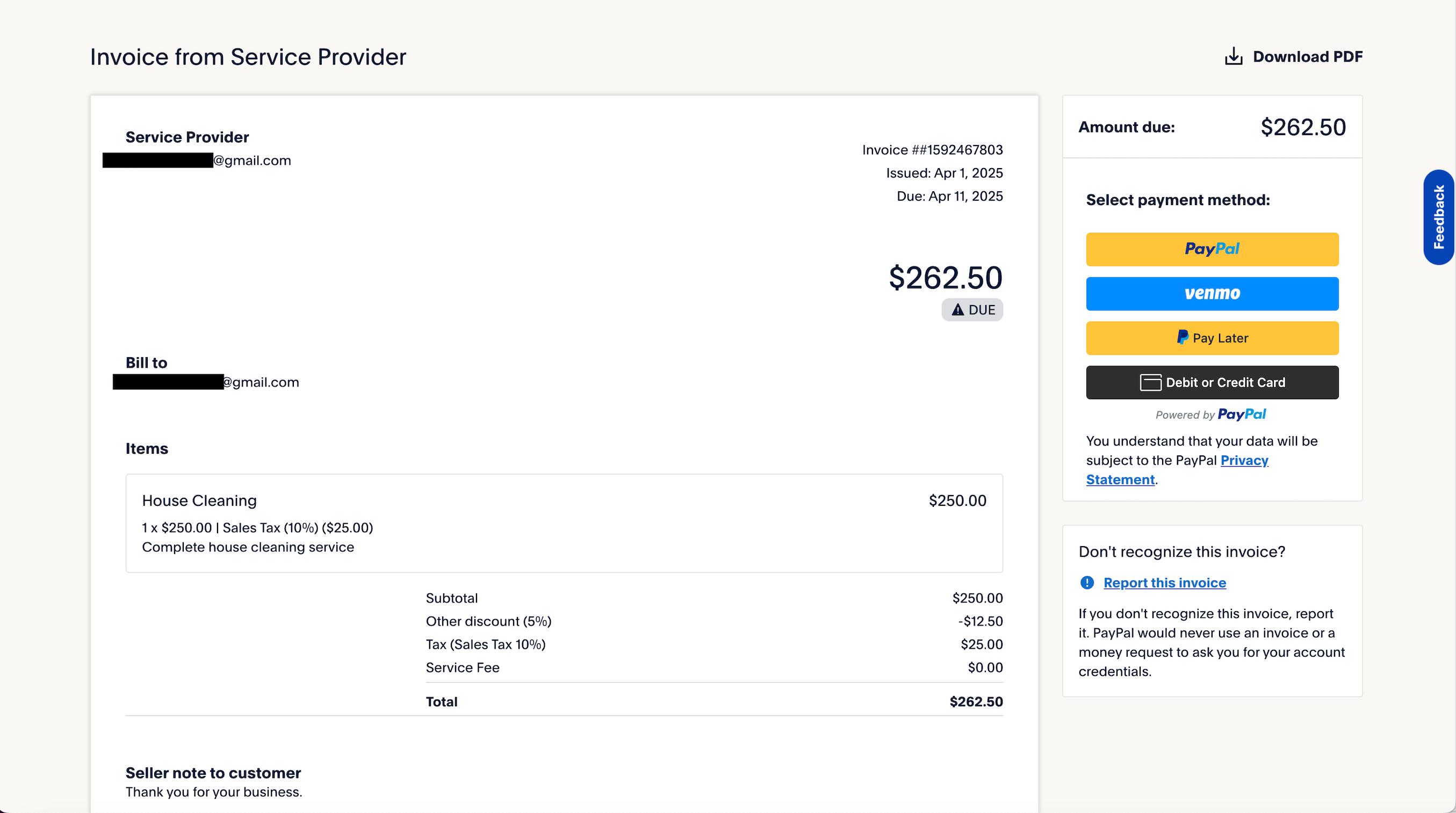
The user supplies the necessary information, as the MCP client indicates. Then the MCP client accesses the necessary data, creates the invoice using the MCP server, and then it sends the invoice, as shown in the following illustration.
The following example shows a sample of the invoice the customer receives.
The Future of Commerce is Agentic
PayPal’s commitment to agentic commerce and its adoption of MCP signals a major step towards a more intelligent and automated future for online business. By providing developers with the tools they need to build innovative AI-driven experiences, PayPal is helping to shape the next generation of digital commerce.
Visa has unveiled a groundbreaking initiative, Visa Intelligent Commerce, poised to redefine the online shopping experience by integrating artificial intelligence (AI) agents into the purchasing process. This platform empowers AI agents to autonomously search for products, make selections, and complete transactions on behalf of consumers, all within user-defined parameters.
What is Visa Intelligent Commerce?
Visa Intelligent Commerce is a platform designed to enable AI agents to handle end-to-end shopping tasks for consumers. Users can set specific preferences and spending limits, allowing AI agents to operate within these boundaries to find, select, and purchase items. This approach aims to streamline the shopping process, reduce cart abandonment, and enhance overall user convenience.
Unlike traditional chatbots, these AI agents function autonomously, requiring minimal human intervention, and are capable of managing complex shopping tasks efficiently.
“Soon people will have AI agents browse, select, purchase and manage on their behalf”
Key Features of Visa Intelligent Commerce
1. AI-Ready Cards
Visa introduces tokenized digital credentials, known as AI-ready cards, replacing traditional card details. These tokens ensure secure transactions by verifying that only authorized AI agents can initiate purchases on behalf of users. This tokenization enhances security and simplifies the payment process for developers and consumers alike.
2. Personalized Shopping Experience
With user consent, AI agents can access basic Visa spending and purchase insights to tailor shopping recommendations. This personalization ensures that AI agents align with individual user preferences, delivering a more customized shopping experience.
3. Secure and Controlled Payments
Users maintain control over their spending by setting clear limits and conditions for AI agent transactions. Real-time commerce signals are shared with Visa, enabling effective transaction controls and dispute management, thereby ensuring a secure shopping environment.
To bring Visa Intelligent Commerce to fruition, Visa has collaborated with leading technology companies, including:
Microsoft
OpenAI
IBM
Anthropic
Mistral AI
Perplexity
Samsung
Stripe
These partnerships aim to integrate AI capabilities with Visa’s payment infrastructure, ensuring a seamless and secure shopping experience for users worldwide.
Implications for Consumers and Merchants
For consumers, Visa Intelligent Commerce offers a more efficient and personalized shopping experience, reducing the time and effort required to make purchases. For merchants, this platform can lead to increased conversion rates by minimizing friction in the purchasing process and catering to consumer preferences more effectively.
Visa’s initiative also addresses the growing demand for secure and trustworthy AI-driven commerce solutions, positioning the company at the forefront of this emerging market.
Looking Ahead
Visa Intelligent Commerce represents a significant step toward the future of AI-integrated shopping experiences. As the platform evolves, it is expected to enhance further the way consumers interact with online marketplaces, offering greater convenience, personalization, and security.
Artificial Intelligence (AI) is evolving faster than ever, and staying updated is critical whether you’re a student, developer, or business owner. Luckily, you don’t have to enroll in expensive courses or read hundreds of academic papers. In 2025, YouTube will remain one of the best platforms for learning AI for free.
In this post, we highlight the Top YouTube Channels you should follow for mastering AI, machine learning (ML), deep learning, and data science this year.
Why Follow: Brandon’s videos use simple analogies and storytelling to make hard AI topics accessible.
Popular Topics: Decision trees, deep learning basics, model interpretation
Best For: Absolute beginners and non-technical audiences
Final Thoughts
AI is one of the most in-demand skills in 2025 and beyond. Whether you’re a total beginner or an experienced developer, following these YouTube channels will help you:
Stay current with the latest AI trends
Build real-world AI projects
Understand AI research without academic overload
Explore new career and business opportunities
🎯 Pro Tip: Pick 2–3 channels that match your learning style — and dedicate at least 30 minutes a day to active AI learning. Consistency is key!
The digital commerce landscape is evolving faster than ever. With global e-commerce projected to reach $6.9 trillion by 2025 (Statista), competition among online stores is fiercer, and smarter digital marketing strategies are critical to survival and growth. In this research-backed guide, we explore the latest digital marketing strategies that drive traffic, improve conversion rates, and maximize return on investment (ROI) for online retailers.
The Importance of Digital Marketing for E-commerce
Digital marketing is the primary engine behind customer acquisition and retention in e-commerce. According to a survey by Shopify, 87% of online shoppers begin their product searches on digital channels — search engines, social media, or online marketplaces. Thus, even the best products risk obscurity without a strong digital presence.
Core Digital Marketing Strategies for Online Stores
1. Search Engine Optimization (SEO)
Organic search still accounts for 53% of all website traffic (BrightEdge). An effective SEO strategy ensures that your products appear prominently when potential customers search for them.
Key Actions:
Conduct keyword research focusing on commercial intent terms (“buy running shoes online,” “best electric toothbrush 2025”).
Optimize site structure for crawlability and speed (Page load times under 2.5 seconds are ideal, per Google).
Develop high-quality content around product comparisons, reviews, and how-to guides.
Emerging Trends:
Voice search optimization
AI-driven SEO auditing
2. Pay-Per-Click (PPC) Advertising
PPC can provide immediate visibility and sales. Google Ads and Bing Ads remain dominant, but Amazon and social media platforms are gaining share.
Key Tactics:
Utilize Google Shopping campaigns.
Implement smart bidding strategies with AI algorithms.
Focus on retargeting campaigns to recapture abandoned cart users.
Interesting Stat: Businesses earn an average of $2 in revenue for every $1 spent on Google Ads (Google Economic Impact Report).
3. Social Media Marketing
Social platforms are not just for brand awareness — they’re powerful sales channels. Platforms like Instagram and TikTok are increasingly integrating shopping functionalities.
Best Practices:
Create Shoppable Instagram posts.
Collaborate with micro and nano-influencers (influencers with <50,000 followers drive 60% higher engagement rates).
Use video content heavily; TikTok reported that 67% of users were inspired to shop even when they weren’t looking.
4. Content Marketing
Content builds trust, which leads to conversions. According to Demand Metric, content marketing generates three times more leads than outbound marketing at 62% less cost.
Effective Content Forms:
In-depth product reviews
Customer case studies
Interactive content (quizzes, polls)
Focus Areas for 2025:
AI-generated personalized content
Content repurposing across multiple platforms
5. Email Marketing
Email marketing continues to boast the highest ROI among digital marketing channels ($42 return for every $1 spent, according to DMA).
Tactics That Work:
Automated drip campaigns
Dynamic personalization based on browsing and purchase behavior
Loyalty programs integrated within email strategies
6. Affiliate and Influencer Marketing
Affiliate marketing spending is expected to exceed $13 billion globally by 2025 (Statista).
Winning Strategies:
Create tiered commission structures to incentivize top-performing affiliates.
Collaborate with niche influencers whose audiences align closely with your brand values.
Note: Influencer authenticity matters more than follower count. Genuine engagement rates outperform vanity metrics.
Advanced Tactics Gaining Momentum
AI and Machine Learning: Predictive analytics for customer behavior forecasting.
Augmented Reality (AR): Try-before-you-buy experiences reduce return rates (IKEA Place App case study).
Chatbots and Conversational Commerce: 74% of consumers prefer interacting with chatbots for simple queries (Salesforce).
Success in digital marketing for online stores in 2025 and beyond hinges on an integrated approach: blending SEO, PPC, social media, content, email, and affiliate marketing seamlessly. Prioritize customer experience, personalization, and data-driven decision-making to stay ahead in the ever-evolving digital marketplace.
Are you ready to future-proof your online store’s marketing strategy? Start by investing in research-driven, customer-centric tactics today.
What’s your biggest digital marketing challenge right now? Share in the comments or contact us for a personalized strategy session!